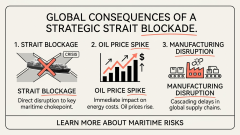
If this single passage were to be disrupted—whether through political conflict, military action, piracy, or natural disaster—the consequences would be catastrophic.
A temporary blockade could send oil prices skyrocketing within hours, potentially triggering economic recessions across multiple continents. Major economies, particularly in Europe, Asia, and North America, would face immediate energy shortages, disrupting manufacturing, transportation, and heating systems. Furthermore, the geopolitical tensions surrounding the strait create constant uncertainty. With Iran on one side and U.S.-allied nations on the other, the region has become a flashpoint for international tensions. Threats of sanctions, military posturing, and regional conflicts perpetually hang over this vital waterway. Additionally, the infrastructure supporting maritime traffic through the strait faces aging equipment, limited capacity expansion options, and increasing concerns about environmental protection and maritime security. Ships navigating these waters must contend with narrow passages, variable sea conditions, and the ever-present threat of piracy and hostile naval activity.