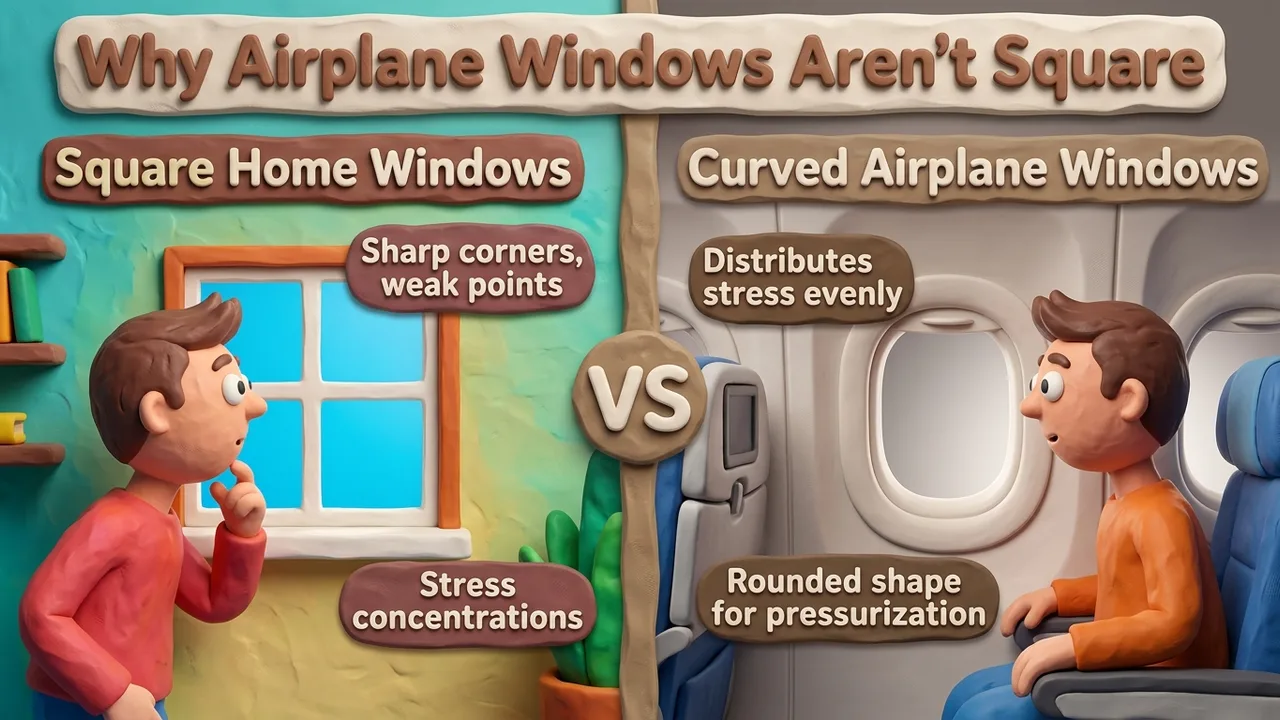
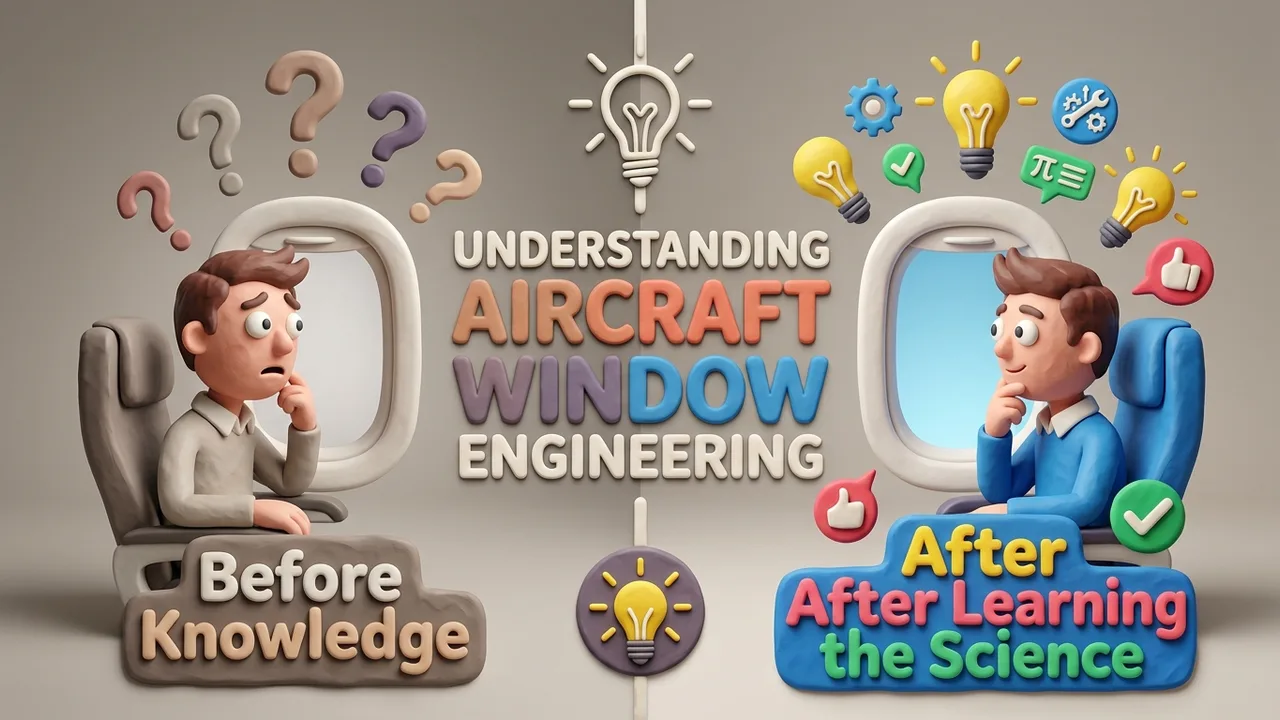
Have you ever wondered why airplane windows aren't square like the windows in your home? It seems like a simple design choice, but there's actually a fascinating and critical reason behind this decision. The shape of airplane windows is determined by engineering principles that directly impact passenger safety and aircraft structural integrity. Today, we're exploring the compelling science behind one of aviation's most important design features.

When aircraft fly at high altitudes, they experience enormous pressure differences between the cabin interior and the external atmosphere. At cruising altitude of 35,000 feet, the outside air pressure drops to nearly zero, while the cabin maintains a pressurized environment equivalent to about 8,000 feet elevation. This creates an extreme stress condition that challenges every component of the aircraft.
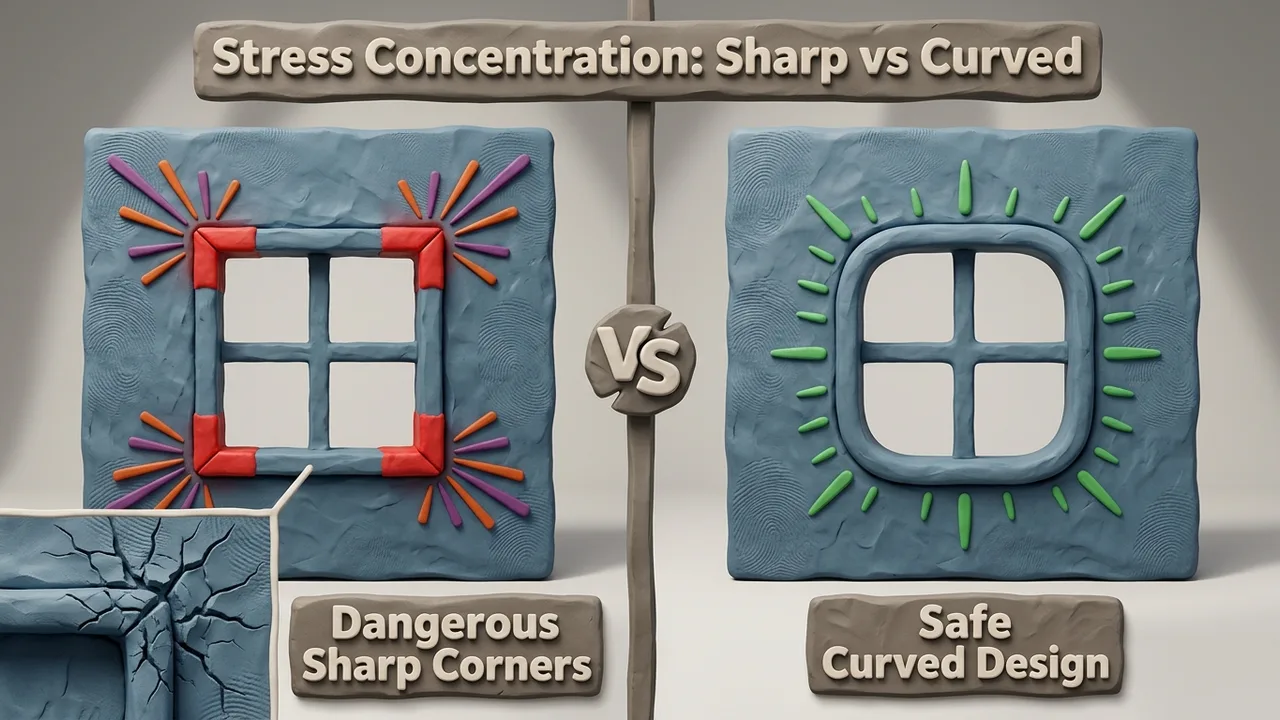
Sharp corners and edges, like those found in square windows, act as stress concentration points where pressure forces intensify dramatically. These stress concentrations can lead to material fatigue, micro-fractures, and potentially catastrophic window failure during flight. Square windows would distribute this pressure unevenly across their surfaces, creating dangerous weak points at the corners that could compromise aircraft safety during long flights. Airplane manufacturers use circular or rounded rectangular windows specifically to distribute pressure forces evenly across the entire window surface.
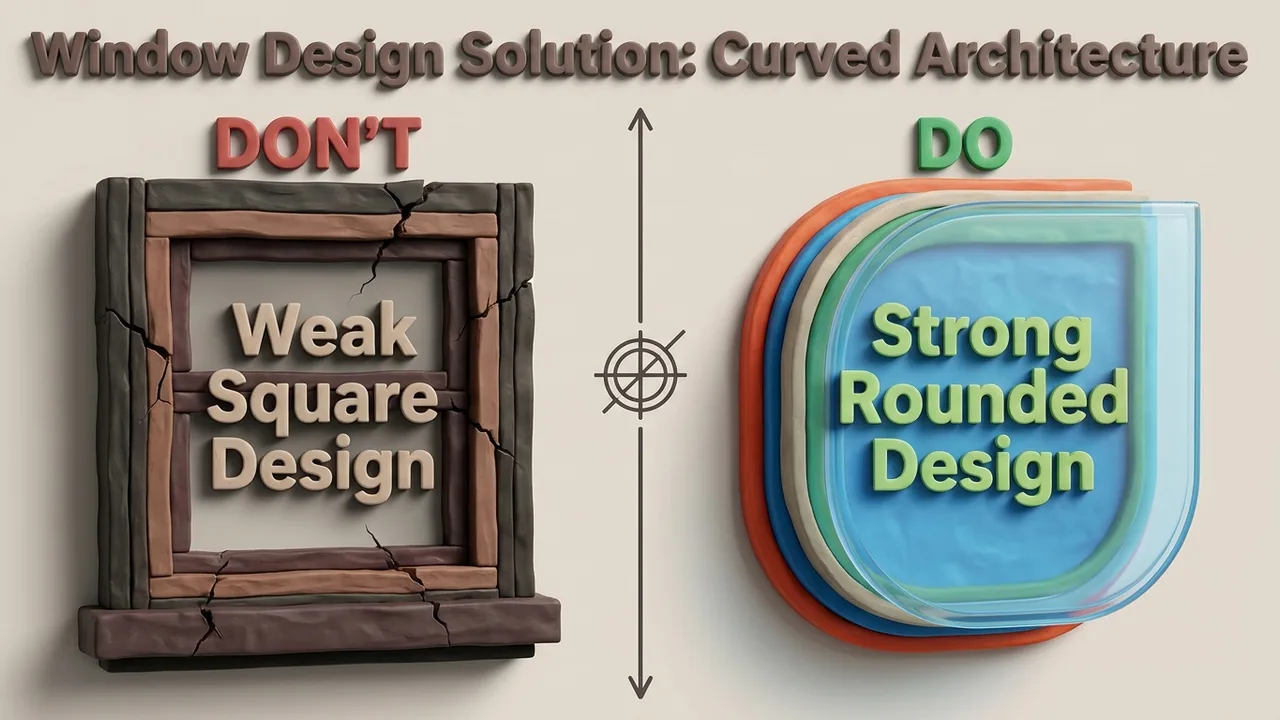
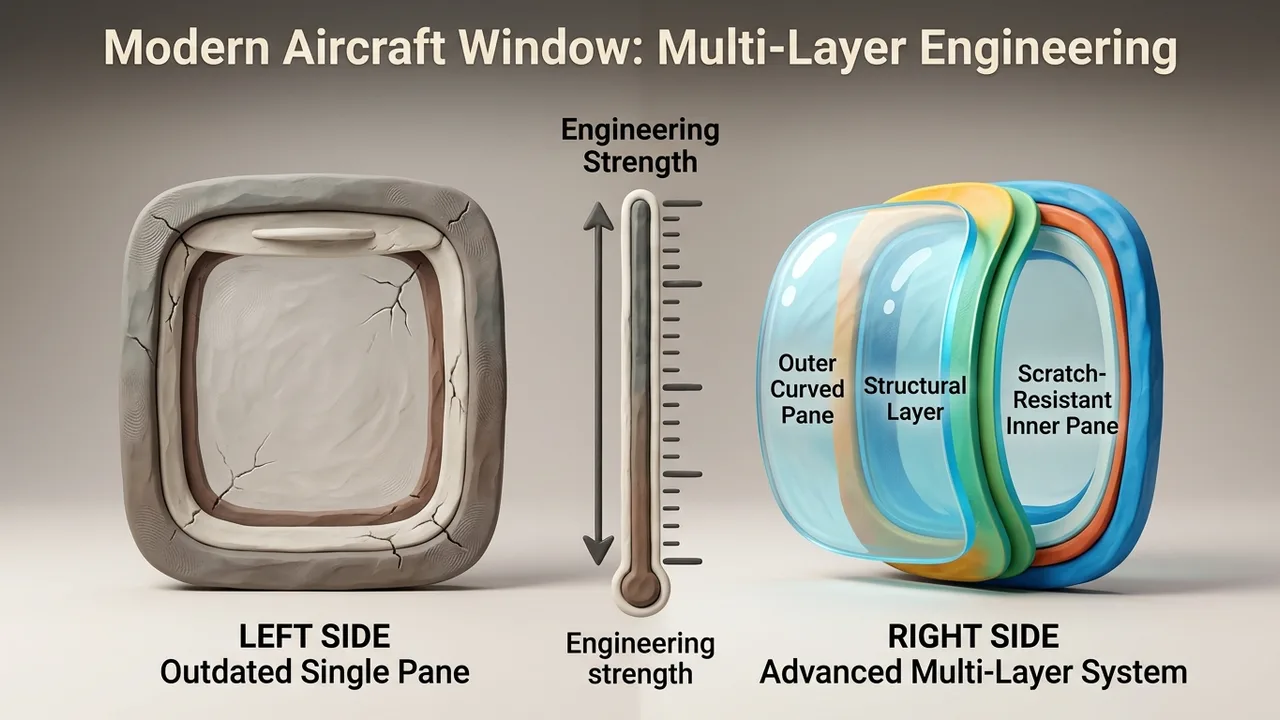
The curved design eliminates sharp corners, ensuring that the immense pressure differential applies consistent stress across the window's structure rather than concentrating force at vulnerable points. This engineering solution dramatically increases the window's structural integrity and ability to withstand repeated pressurization cycles. Additionally, rounded windows are significantly stronger for their weight, allowing manufacturers to use thinner materials while maintaining superior safety standards. The curved design also provides better aerodynamic properties, reducing drag and improving fuel efficiency. Modern aircraft windows typically feature a multi-layer construction with an outer curved pane, a middle layer, and an inner scratch-resistant pane, all working together to maintain structural stability and passenger safety throughout the aircraft's operational life.
Next time you fly, take a moment to observe the curved windows and appreciate the sophisticated engineering that keeps you safe at altitude. Share this knowledge with fellow travelers to help them understand the practical science behind aircraft design.
If you're interested in learning more about aviation engineering and safety innovations, explore additional resources on aircraft design principles and structural engineering. Consider how other industries apply similar stress-distribution principles to their products for enhanced safety and durability.