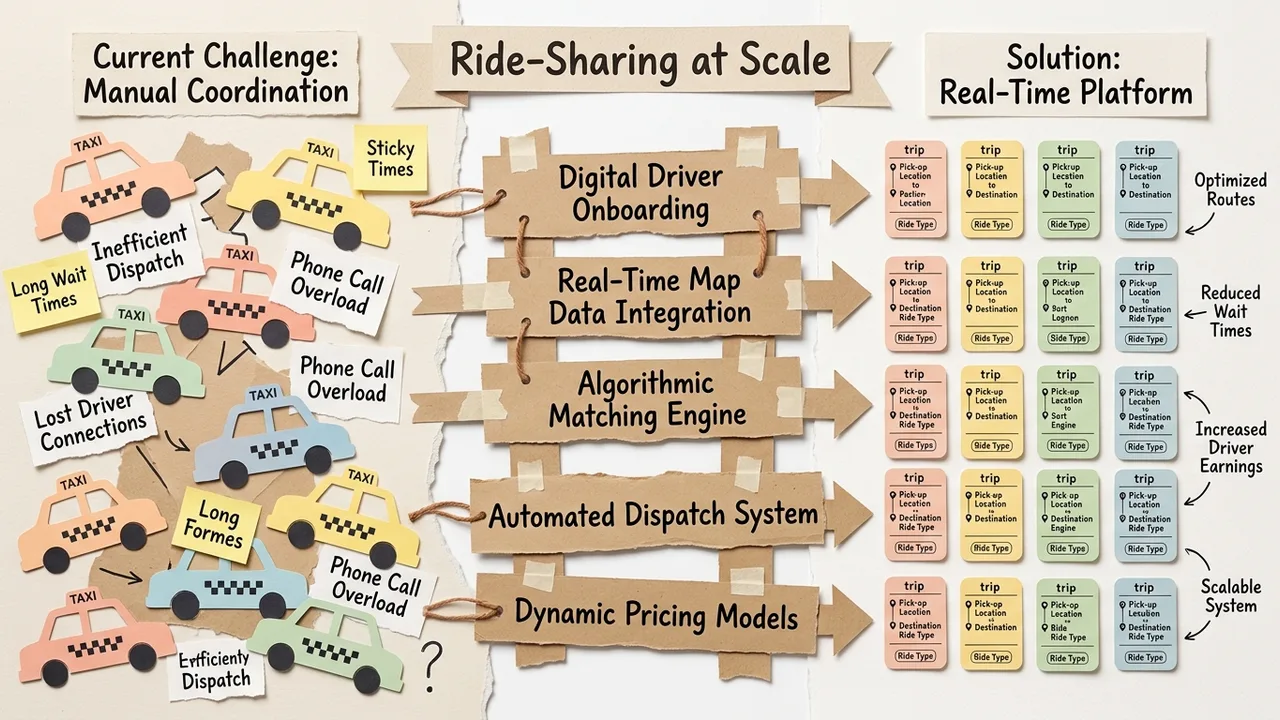
Imagine you're running a ride-sharing platform with thousands of trips happening simultaneously across multiple cities. Your system needs to capture every trip request, track vehicle locations in real-time, process payments instantly, and ensure no data is lost even when servers fail.
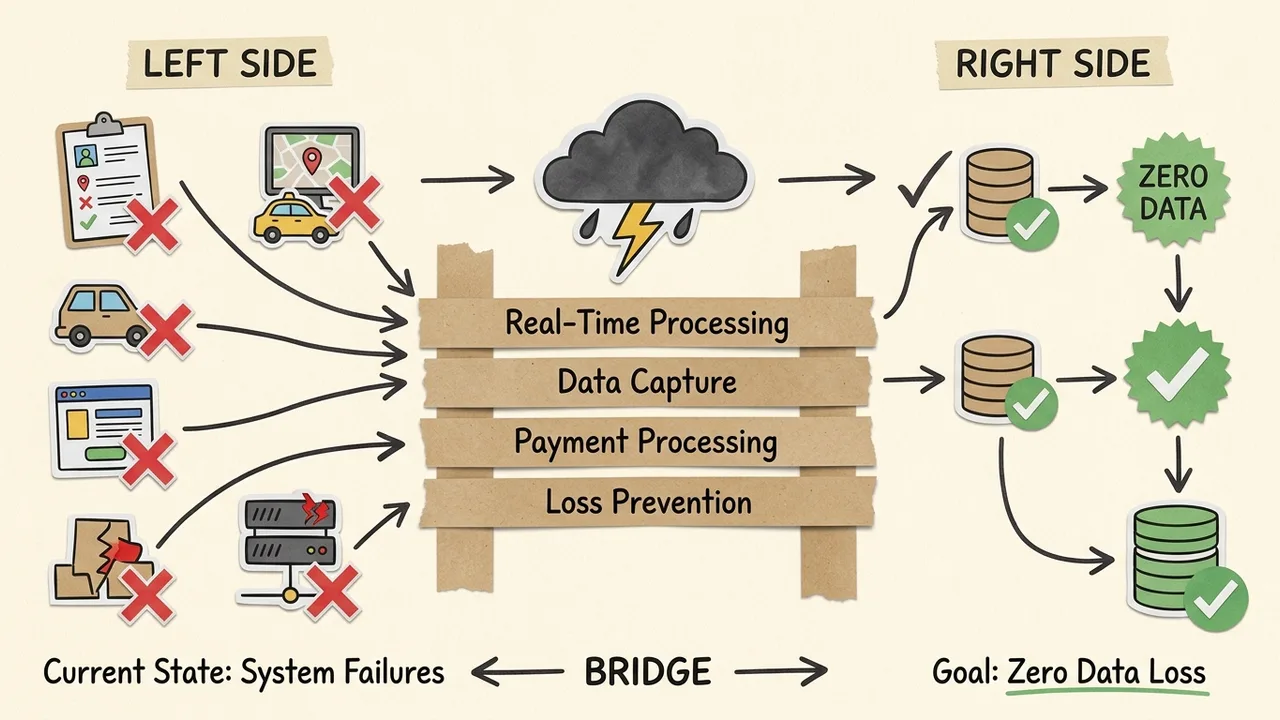
This is exactly the challenge that modern businesses face every single day. As organizations generate more data than ever before, they need a platform that can handle massive volumes of information reliably and at scale. That platform is Apache Kafka. In this comprehensive guide, we'll explore how Kafka transforms raw data streams into actionable insights and enables real-time applications that power today's most dynamic businesses.
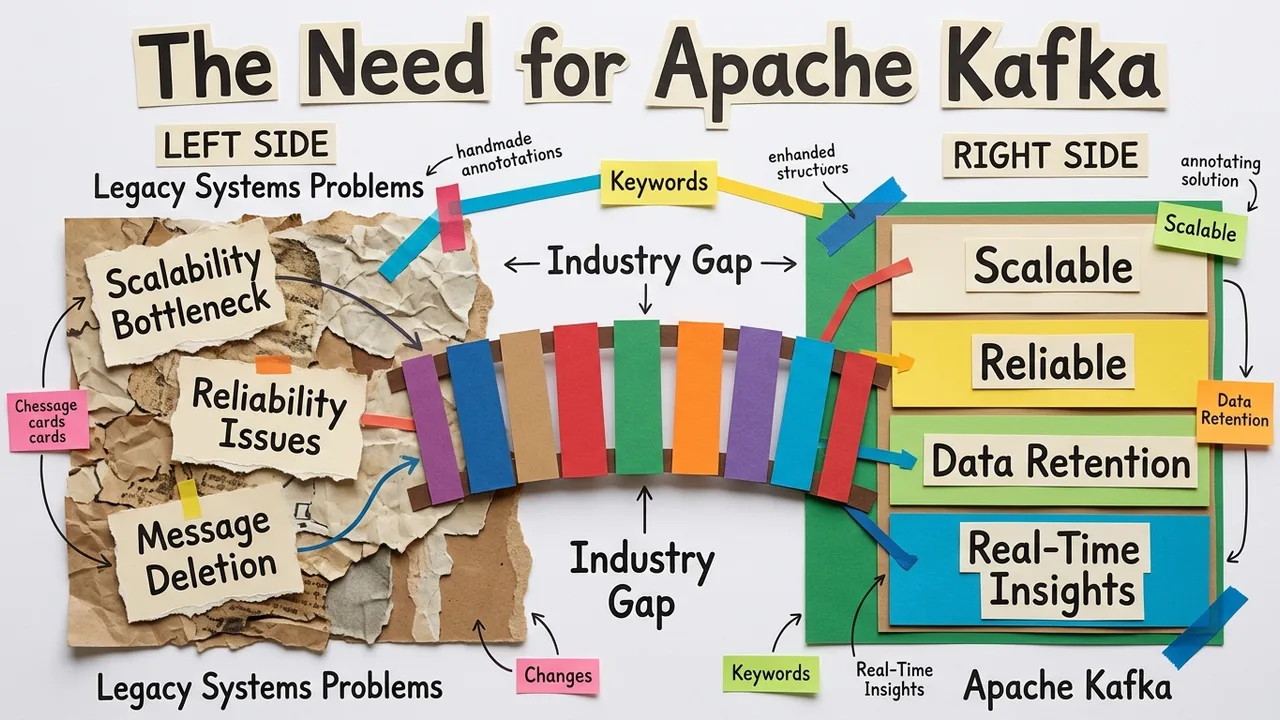
Traditional messaging systems and data pipelines struggle with several critical challenges that impact modern applications. First, there's the scalability problem. When you have millions of events happening every second across multiple sources, conventional systems buckle under the load, causing bottlenecks and delays. Second, there's the reliability issue. If a server crashes or a network connection fails, you risk losing valuable data permanently, which is unacceptable for financial transactions, healthcare records, or critical business operations. Third, traditional systems often delete messages after consumption, making it impossible to replay or reprocess historical data if your business logic changes or errors occur. Moreover, organizations need to integrate data from dozens of different sources—databases, sensors, mobile apps, cloud services—while simultaneously feeding processed data to multiple destinations. Building custom integrations for each combination becomes a nightmare of complexity and maintenance. Additionally, many systems lack the ability to perform complex, stateful stream processing directly, forcing engineers to build convoluted workarounds and external processing frameworks. Teams struggle to correlate events across different systems and maintain consistency when data flows through multiple stages of transformation. These challenges create a cascading effect where businesses cannot react to events in real-time, losing competitive advantage and operational efficiency.
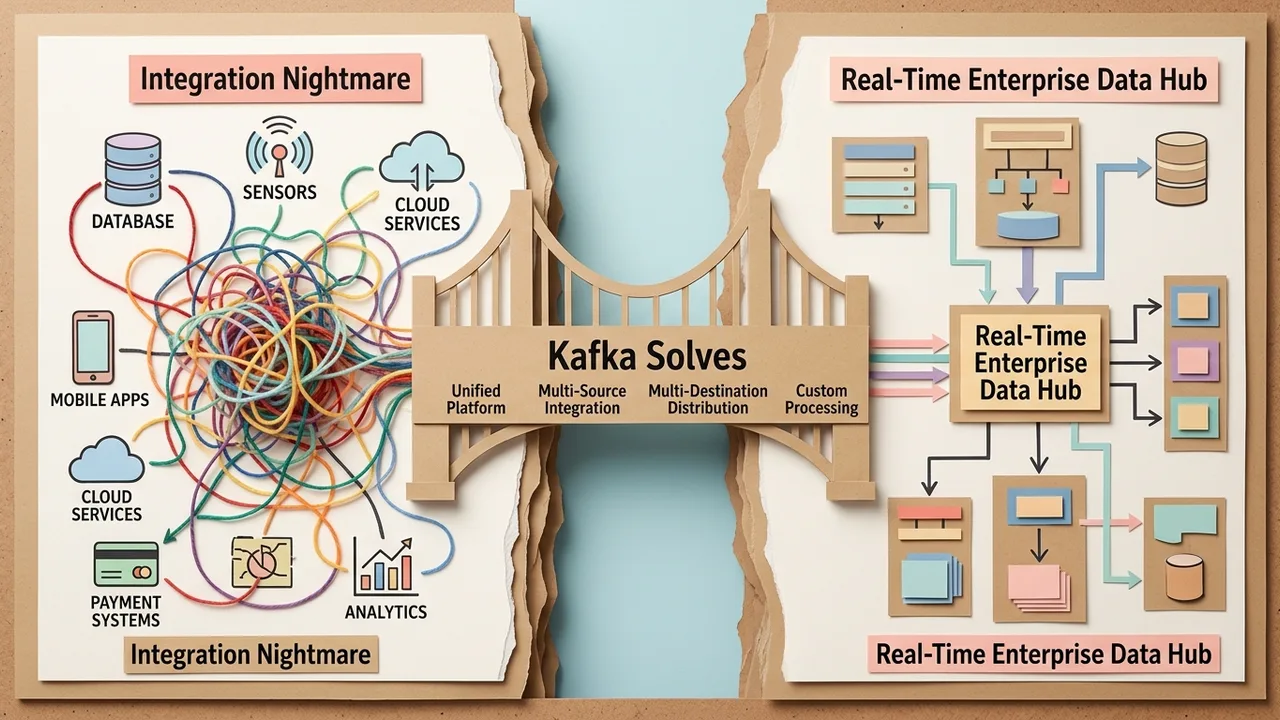
Apache Kafka addresses these fundamental challenges through a revolutionary distributed architecture designed specifically for event streaming. At its core, Kafka is a distributed publish-subscribe messaging platform that acts as a central nervous system for your data infrastructure. Here's how it solves your problems: Kafka operates as a cluster of servers called brokers that work together seamlessly. Data flows into Kafka through producers—applications or systems that write events—and gets organized into topics, which are essentially logs of events organized by category. This distributed design means you can write to and read from many brokers simultaneously, achieving massive throughput and scalability that traditional systems cannot match.
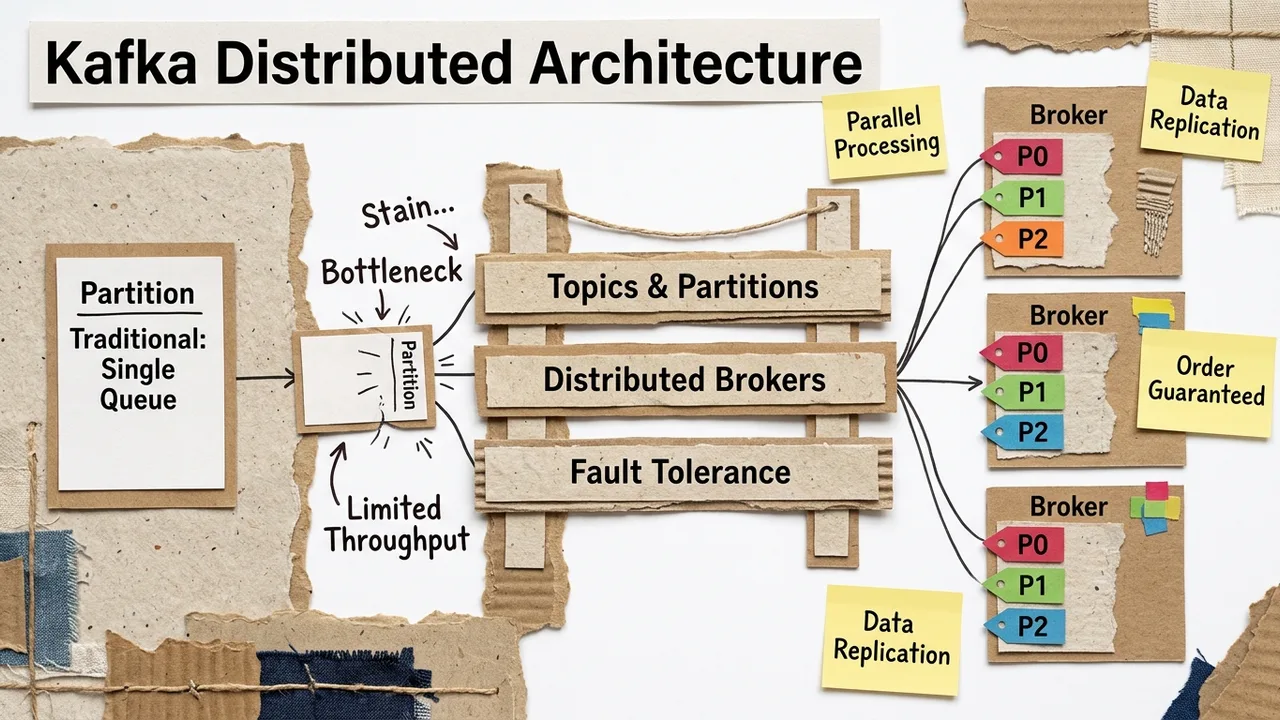
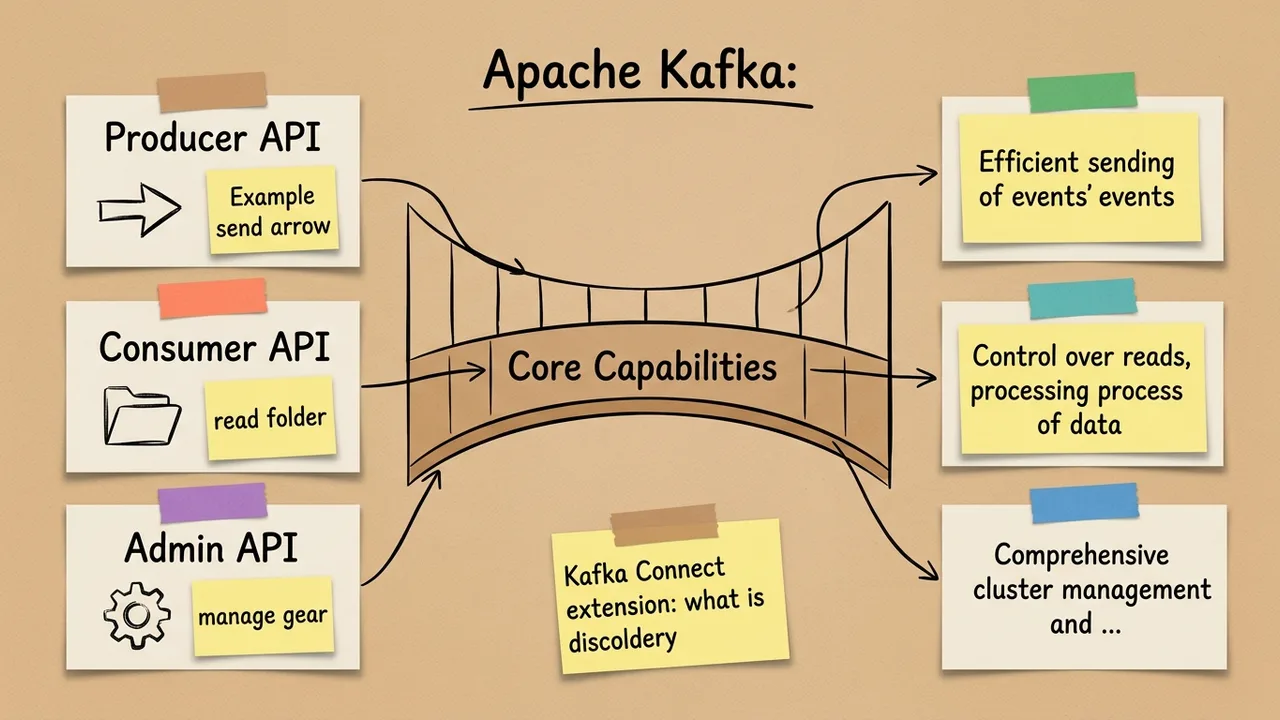
The architecture includes several powerful features that work together. Topics are broken into partitions, which means a single topic's data is distributed across multiple brokers. This partitioning enables parallel processing and ensures that events with the same key always go to the same partition, maintaining order and consistency. For example, all trip requests from a specific driver stay in the same partition in the same order they arrived. Kafka provides fault tolerance through replication—each partition is automatically copied to multiple brokers. With a replication factor of three, your data exists on three different machines, so losing one or even two brokers doesn't impact your system. Unlike traditional messaging systems, Kafka retains events even after consumption, allowing consumers to replay data or reprocess events whenever needed. Kafka provides three essential APIs for building applications. The Producer API lets applications send events efficiently to topics. The Consumer API enables applications to read and process events with full control over their reading position, allowing you to pause, resume, or even rewind through historical data. The Admin API allows you to manage clusters, brokers, and topics programmatically. Beyond the core APIs, Kafka includes powerful extension components. Kafka Connect provides a framework for integrating external systems through source connectors that bring data into Kafka and sink connectors that push processed data out to databases, data warehouses, and other systems. Kafka Streams is a client library that enables sophisticated real-time processing directly on data streams, allowing you to perform aggregations, joins, windowing operations, and complex transformations without building a separate infrastructure.
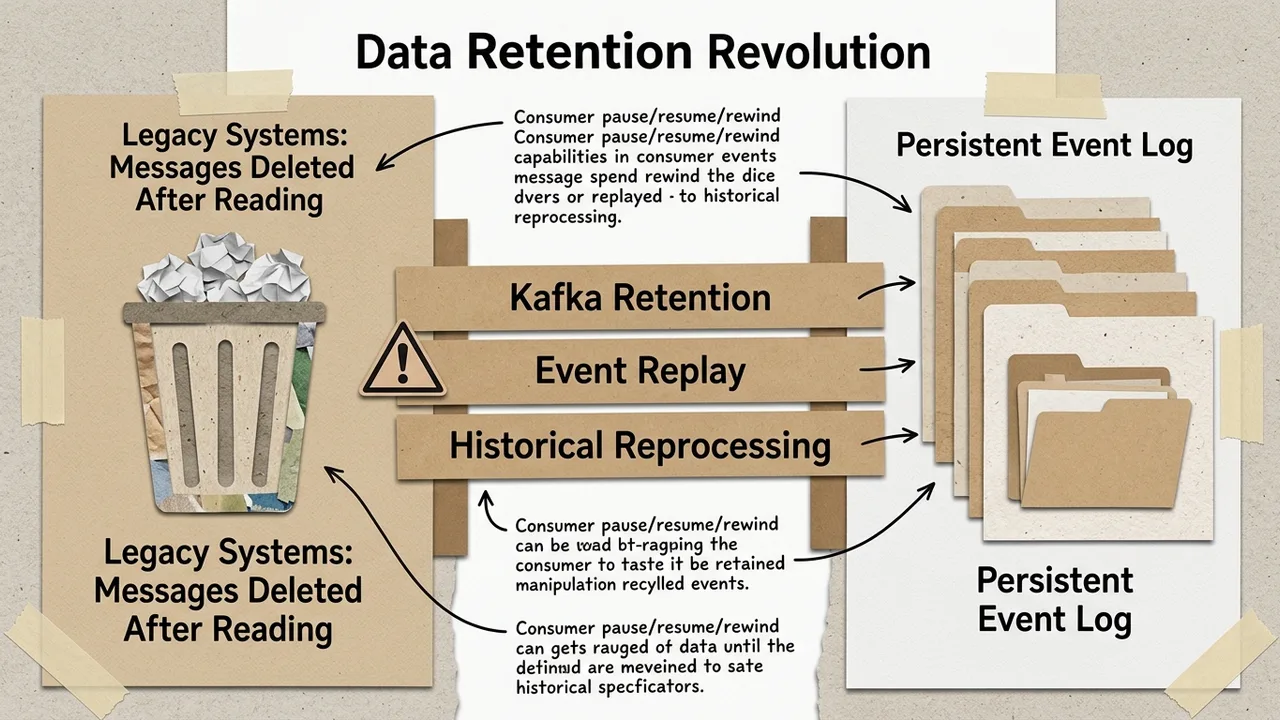
Kafka's genius lies in its durability and performance characteristics. The append-only log structure means data is always added to the end, never modified, creating an immutable record of events. This design makes Kafka's performance essentially constant regardless of how much data you store, so archiving years of historical data has minimal performance impact. Whether you're processing payments and financial transactions, tracking vehicle fleets in real-time, analyzing sensor data from thousands of IoT devices, gathering metrics from distributed systems, or decoupling different divisions of your company, Kafka provides the foundation. Now that you understand Apache Kafka's architecture and capabilities, it's time to apply this knowledge to your organization. Start by identifying your most critical data flows and real-time requirements.
Map out which systems are your data sources and which systems need to consume that data. Consider how Kafka could replace fragile custom integrations with a robust, scalable platform. Begin with a proof-of-concept project using a small Kafka cluster—perhaps with three brokers and a replication factor of three for production-grade reliability.
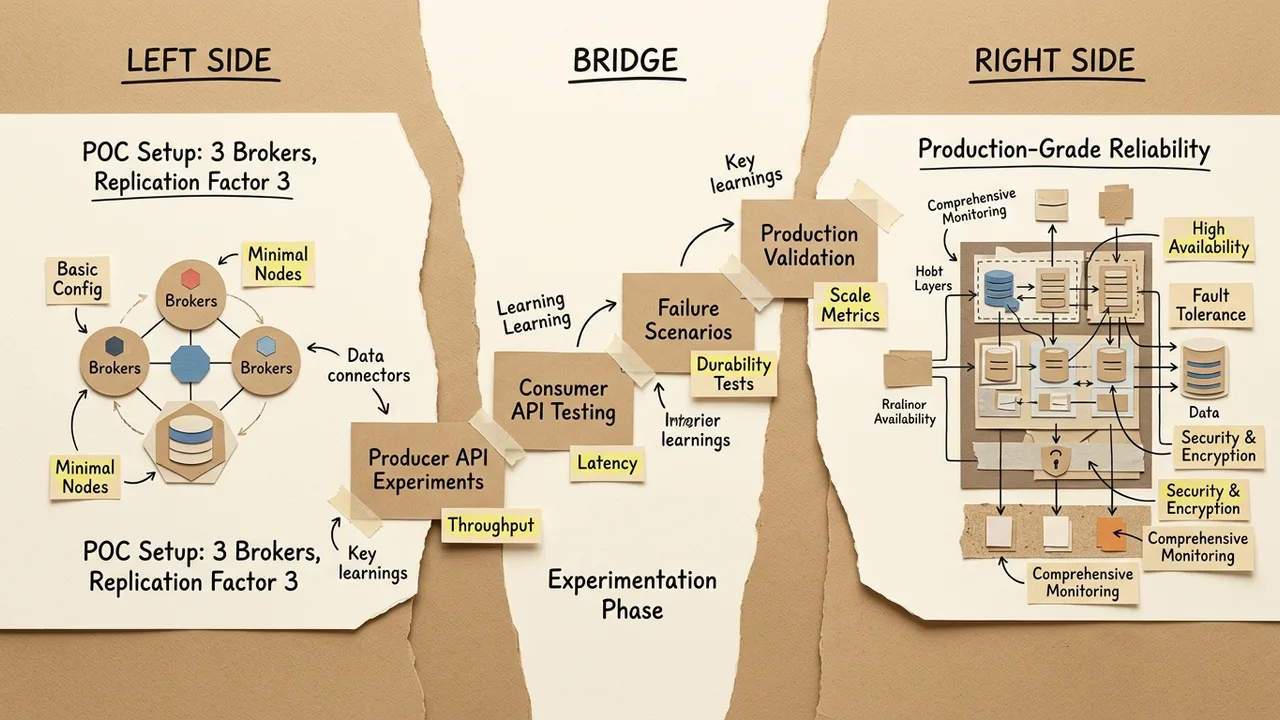
Experiment with both the Producer and Consumer APIs to understand how events flow through your system. Explore Kafka Connect to integrate your databases and applications without writing custom code. If you need sophisticated real-time processing, evaluate Kafka Streams for handling aggregations and joining multiple event streams. Most importantly, start building today. The Kafka community provides extensive documentation, CLI tools for administration, and Java and Scala APIs to implement your event streaming solution. Join the thousands of companies worldwide that have transformed their data architectures with Kafka and unlock the power of real-time data processing for your business.