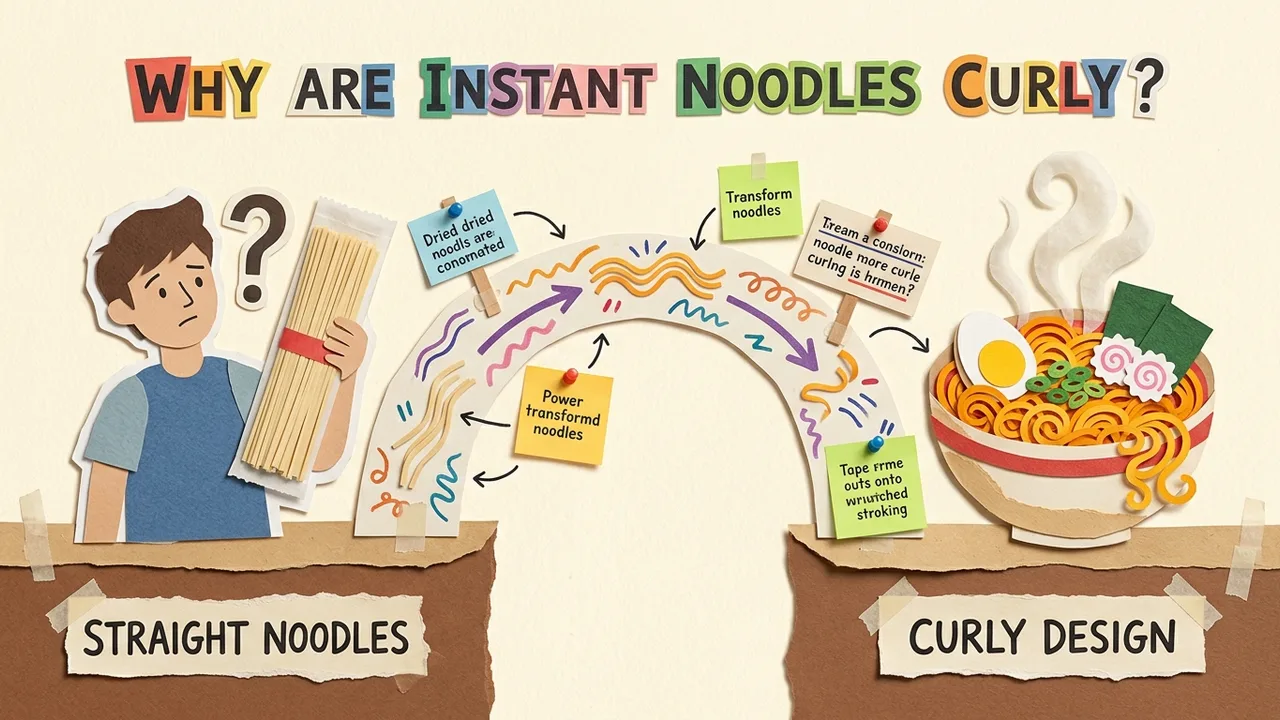
Have you ever wondered why instant noodles are curly instead of straight? It's not just a random design choice. Every time you open a package of instant ramen or cup noodles, you're holding the result of decades of innovation and scientific engineering.
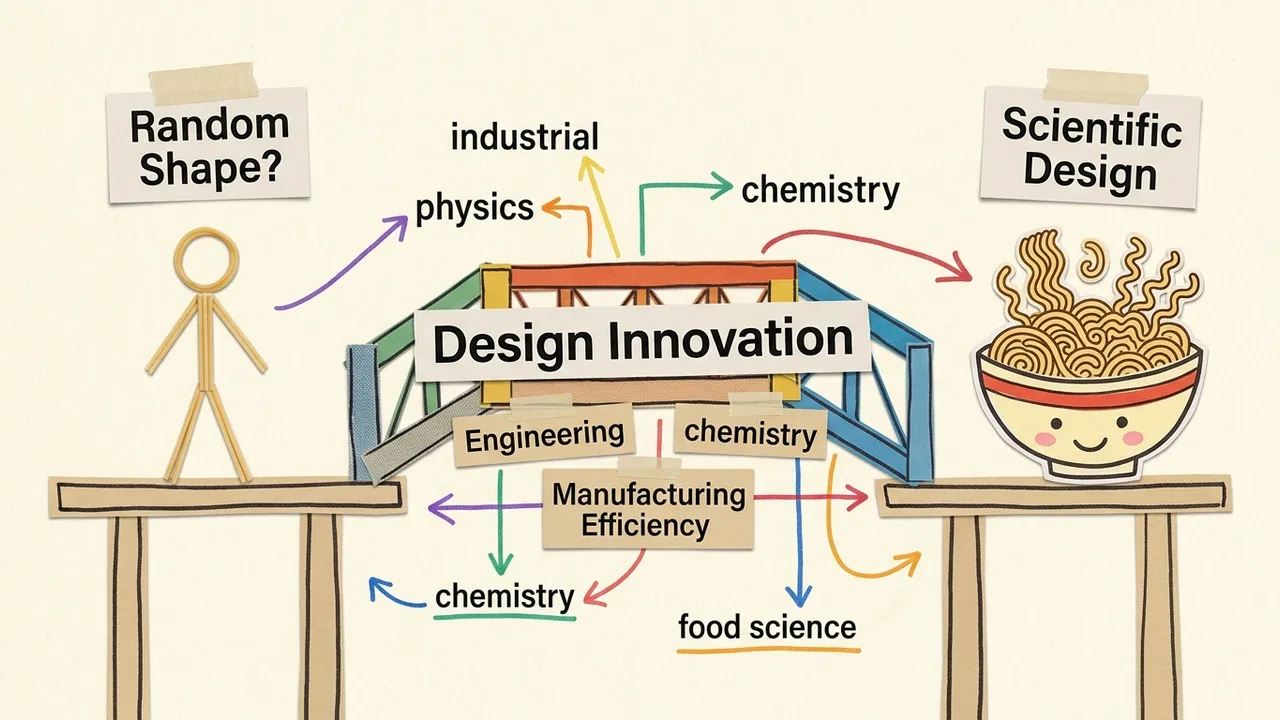
The distinctive wavy shape you see isn't accidental—it's the product of careful consideration involving physics, chemistry, food science, and manufacturing efficiency. Today, we're diving deep into the fascinating reasons behind this universal design that changed how billions of people eat around the world.
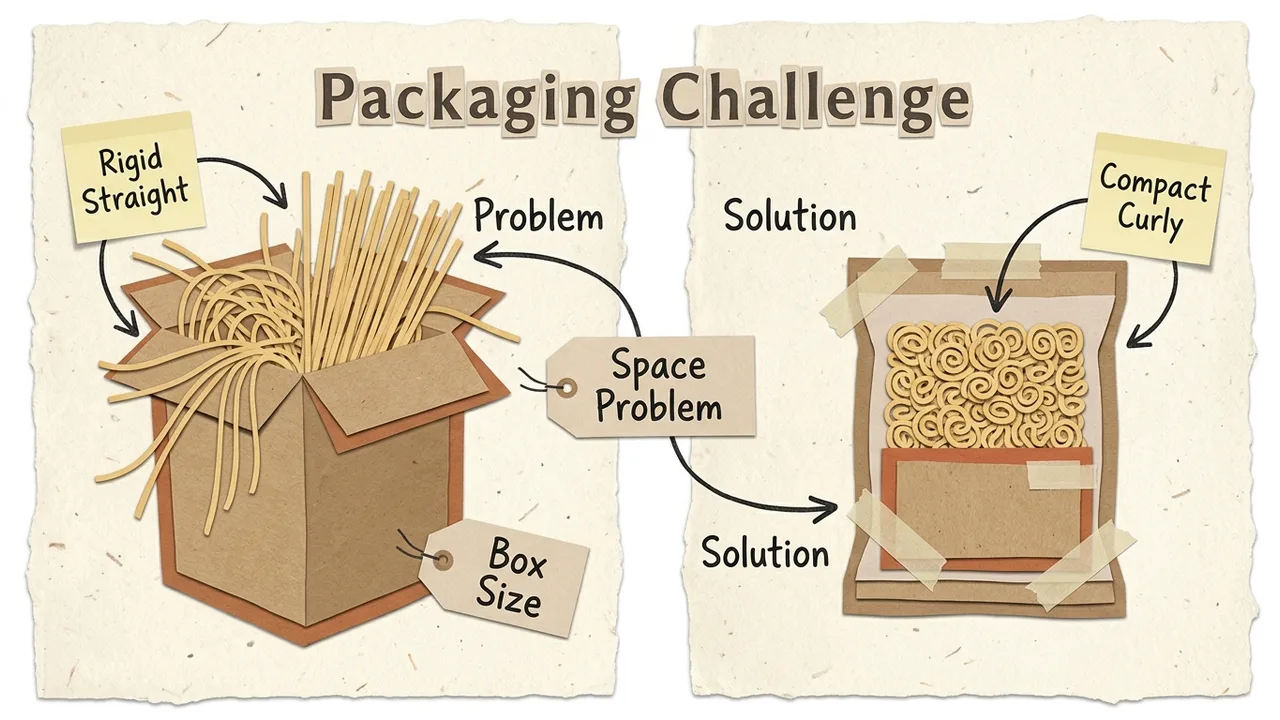
Most people never stop to think about why instant noodles have that characteristic curly appearance. We simply accept them as they are, without understanding the genuine problems that the straight noodle format would have created. Imagine if instant noodles were perfectly straight, like spaghetti. They wouldn't fit efficiently into the compact packages we're familiar with.
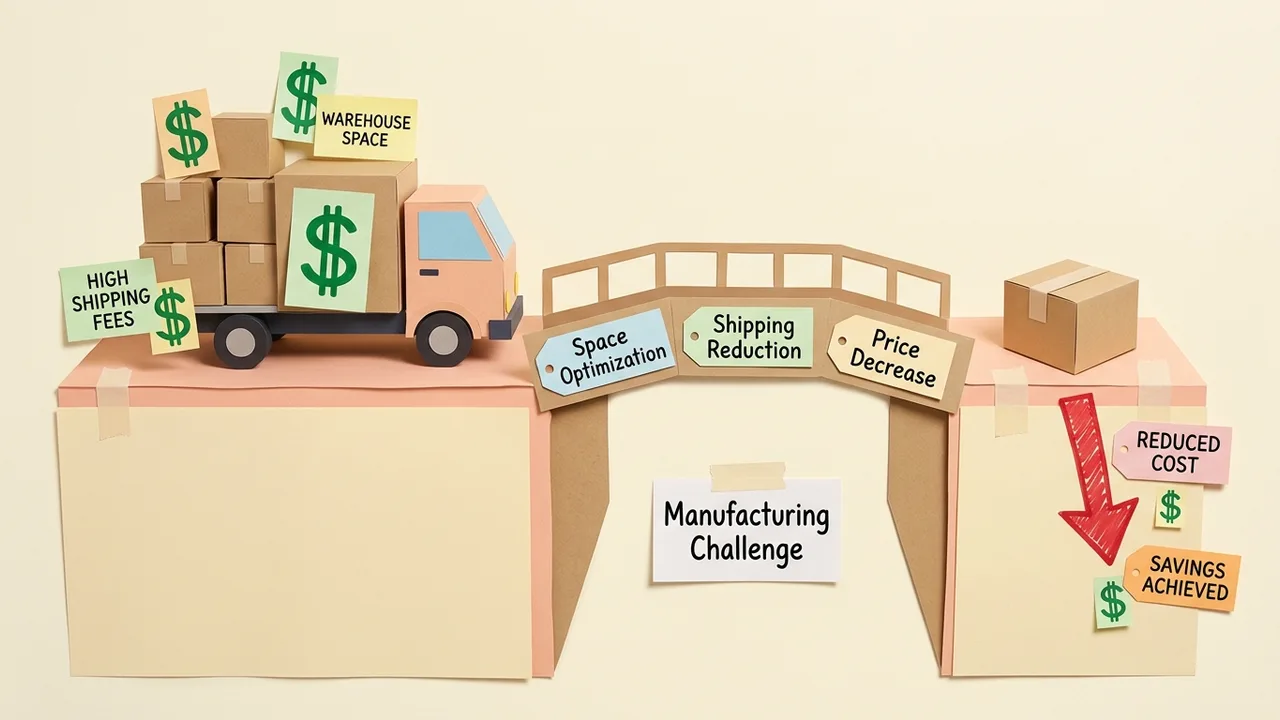
A straight noodle is rigid and takes up significantly more space, meaning each package would need to be substantially larger to contain the same amount of noodles. This would increase shipping costs, storage space requirements, and ultimately the price you pay at the store. Beyond packaging challenges, straight noodles would also cook unevenly and take considerably longer to fully hydrate. The curled structure was actually invented to solve multiple interconnected problems that manufacturers and consumers faced during the early days of instant noodle production. The curly shape of instant noodles serves several critical functions that directly improve the product.
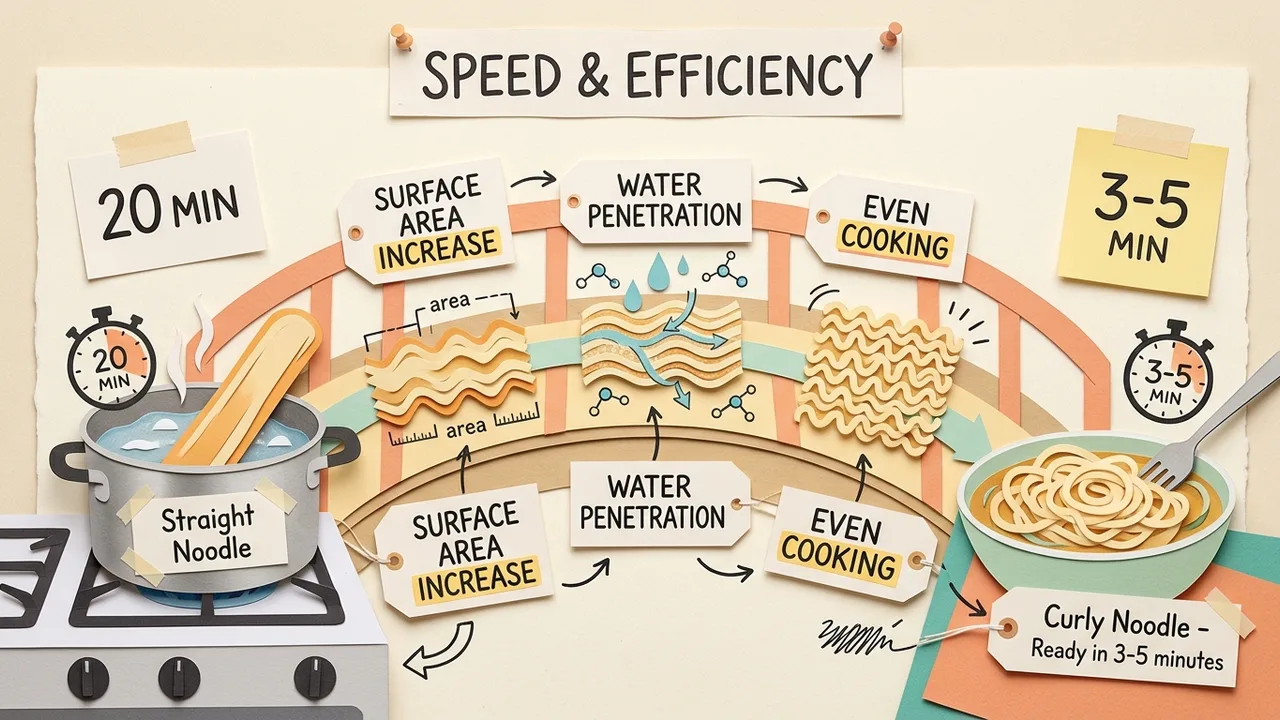
First, the wavy structure dramatically increases surface area without adding more noodles, which means they cook faster and more evenly when hot water is added. This increased surface area allows water to penetrate the noodles more thoroughly and quickly, reducing cooking time from potentially fifteen or twenty minutes down to just three to five minutes.
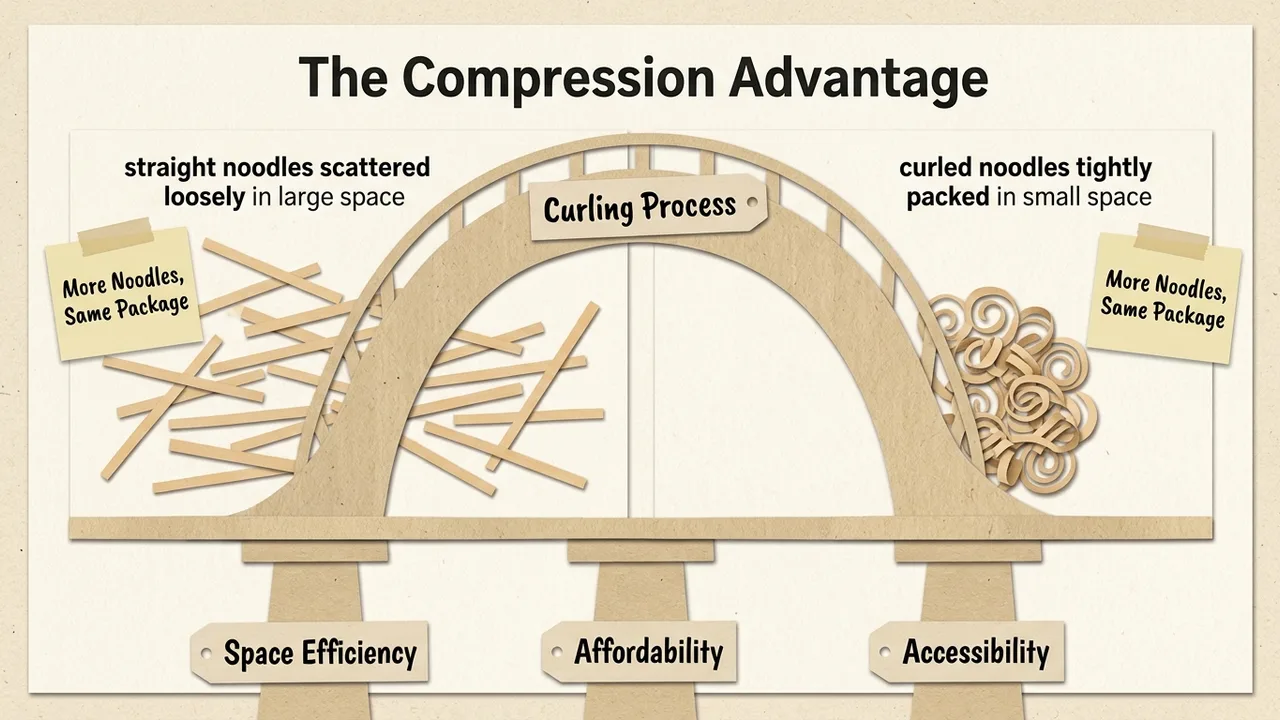
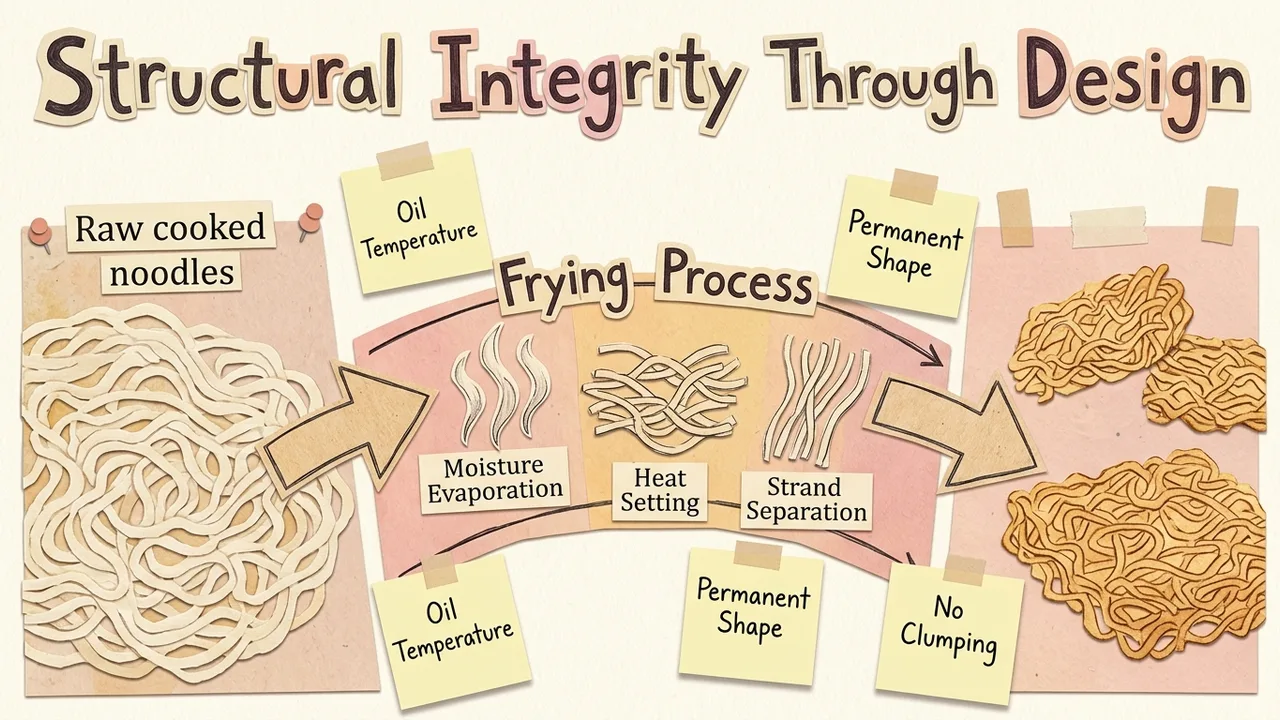
Second, the curly design allows manufacturers to pack significantly more noodles into a smaller space. Think of it like compression—when you curl something, you can fit more of it into the same volume. This space efficiency made instant noodles affordable and accessible to consumers worldwide. Third, the shape creates structural integrity during the drying and frying process. The waves and curves help the noodles maintain their individual strands without sticking together into one solid clump. The manufacturing process itself involves cooking the noodles, then frying them in oil at high temperatures, which causes the moisture to rapidly evaporate and the structure to set permanently. The curly shape forms naturally during this process, creating channels and pockets that help with even heat distribution and moisture removal. Additionally, the curved structure provides better mouthfeel and texture when you're eating the finished product. The waves create more surface area for sauce and broth to cling to, distributing flavor more evenly throughout each bite. This is why curly noodles tend to taste better than straight alternatives—they simply hold more flavor and create a more satisfying eating experience. Next time you're preparing instant noodles, take a moment to appreciate the engineering that goes into that simple package.
Notice how quickly the noodles hydrate, how they distribute evenly in the pot, and how they hold onto the flavor of your broth or sauce. If you're interested in learning more about food science and the innovations behind everyday products you use, consider exploring documentaries about food manufacturing or reading articles about the history of instant noodles and how they revolutionized global food culture.
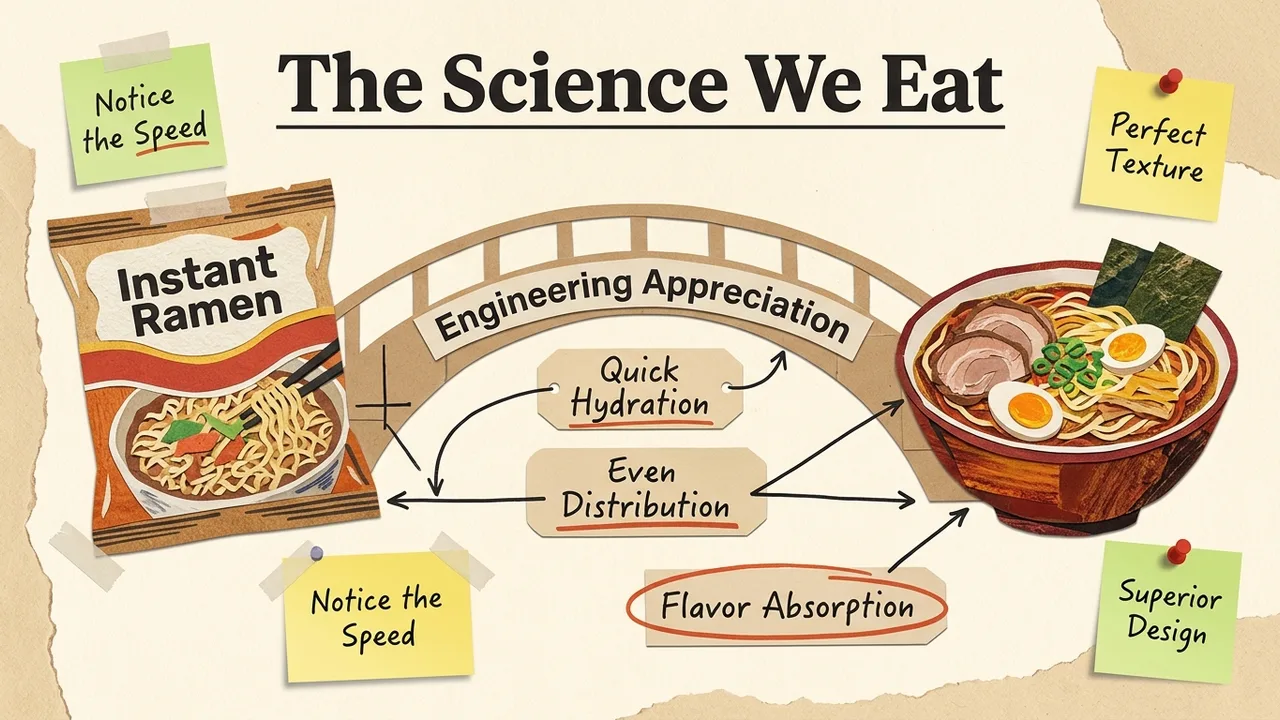
You might even experiment by comparing the cooking time, texture, and flavor absorption of curly noodles versus other pasta shapes to see firsthand how the design impacts the final product. Understanding the science behind what we eat makes us more informed consumers and helps us appreciate the thoughtful design that goes into the foods we enjoy every day.