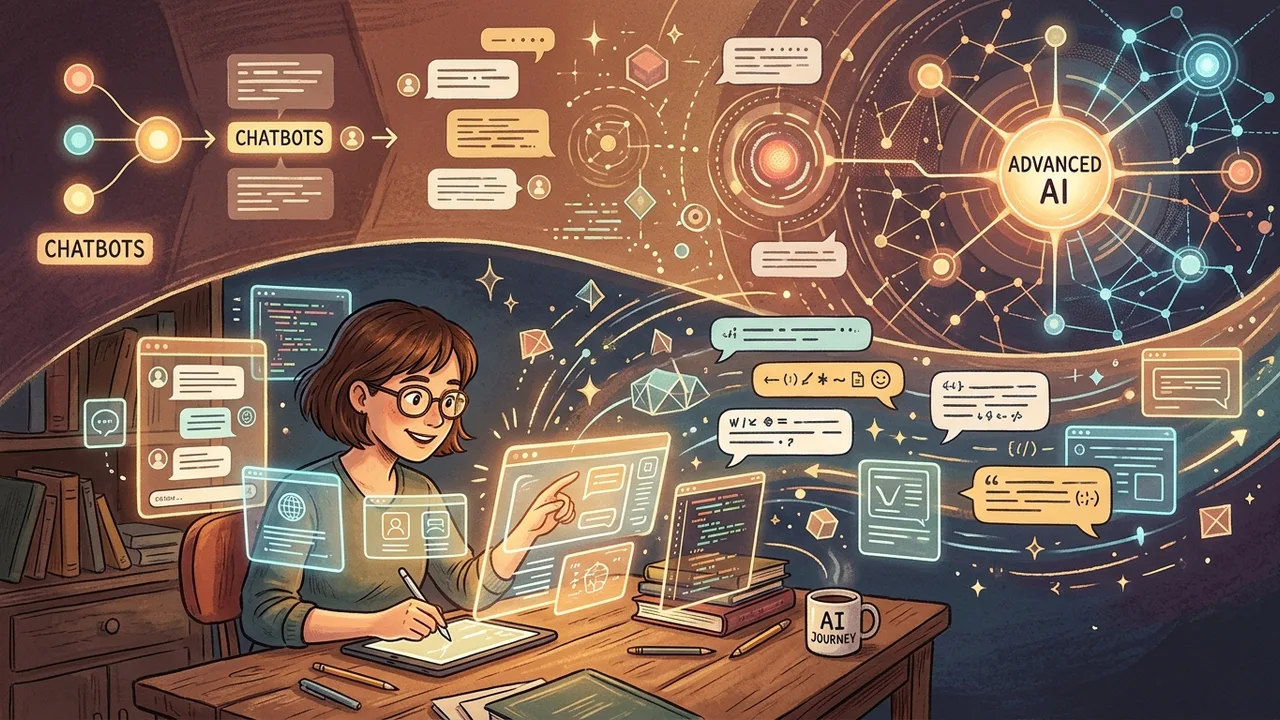
Ever wondered how AI went from simple chatbots to ChatGPT, the technology that can write essays, code, and answer complex questions? The journey is more fascinating than you might think. In just a few years, we've witnessed an incredible transformation in artificial intelligence that's reshaping how we work and communicate.
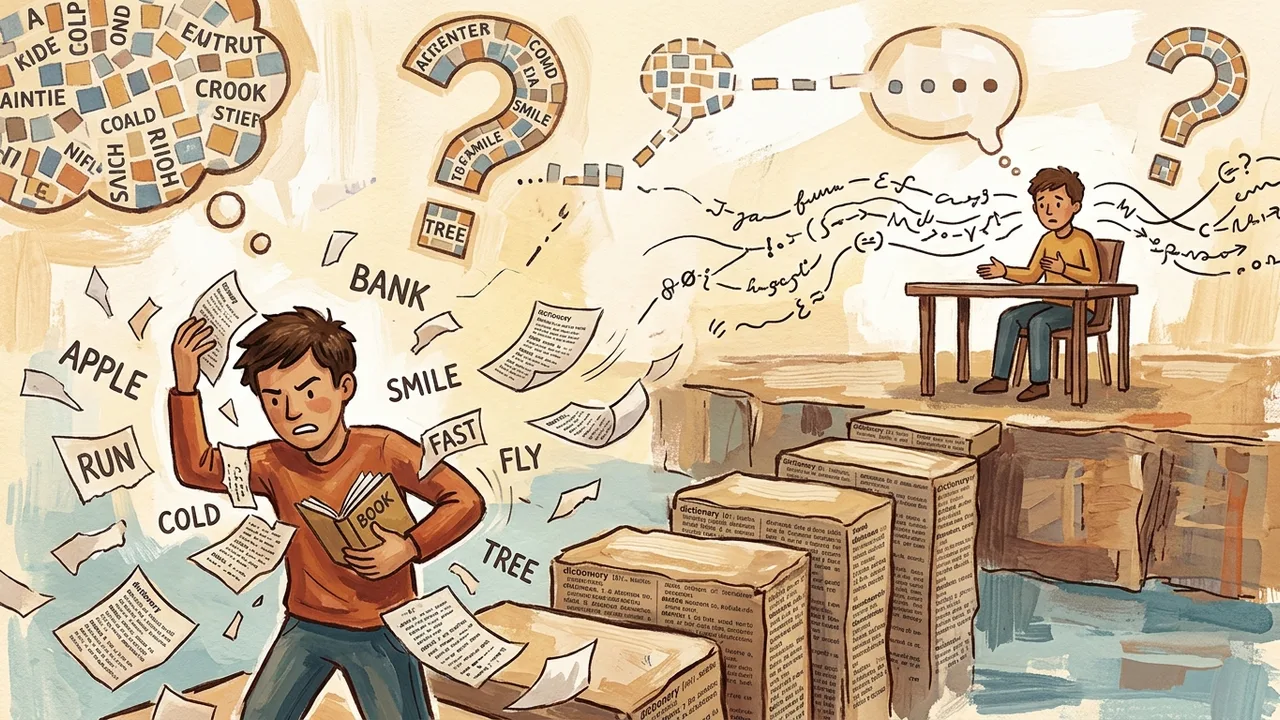
Before 2017, AI struggled with a fundamental problem: understanding context. Traditional models processed words in isolation, like reading a dictionary rather than understanding a conversation. They couldn't grasp how one word relates to another, making it impossible for them to engage in meaningful dialogue. This limitation kept AI from truly understanding language the way humans do.
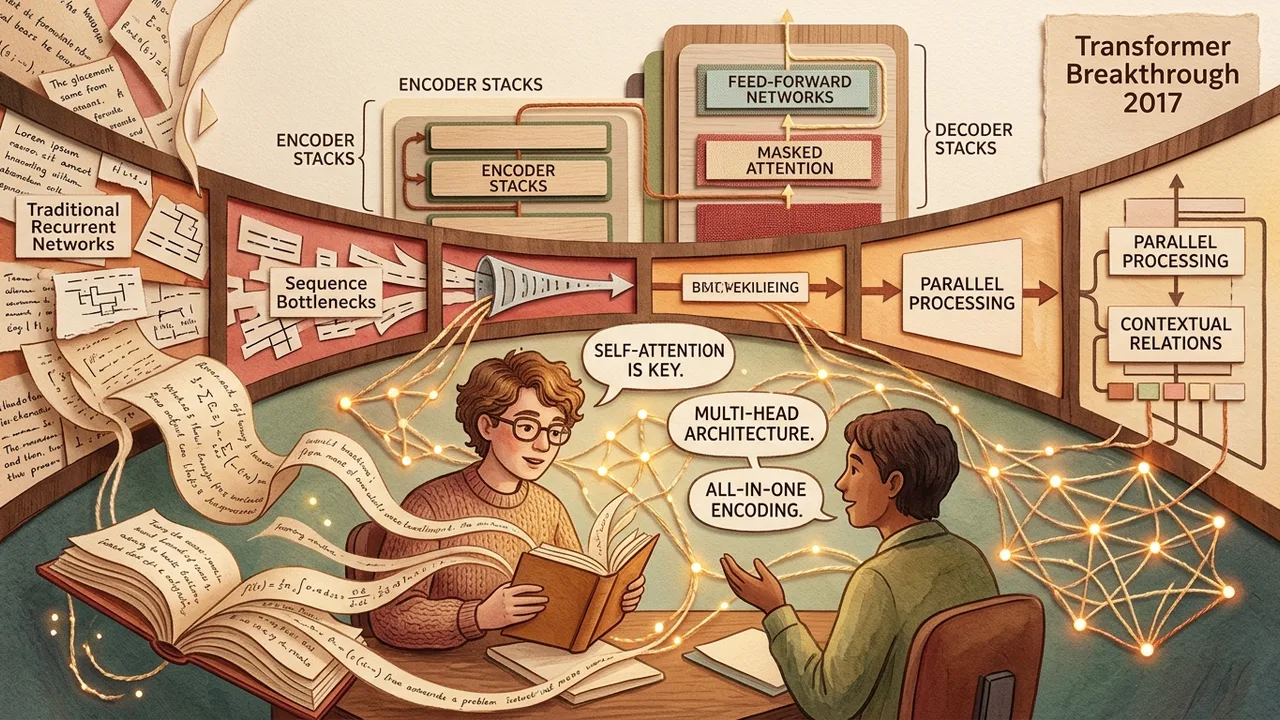
The breakthrough came with the Transformer architecture in 2017, which revolutionized how AI processes language. Think of it like this: instead of learning from a dictionary, the Transformer learns by reading entire books and having conversations.
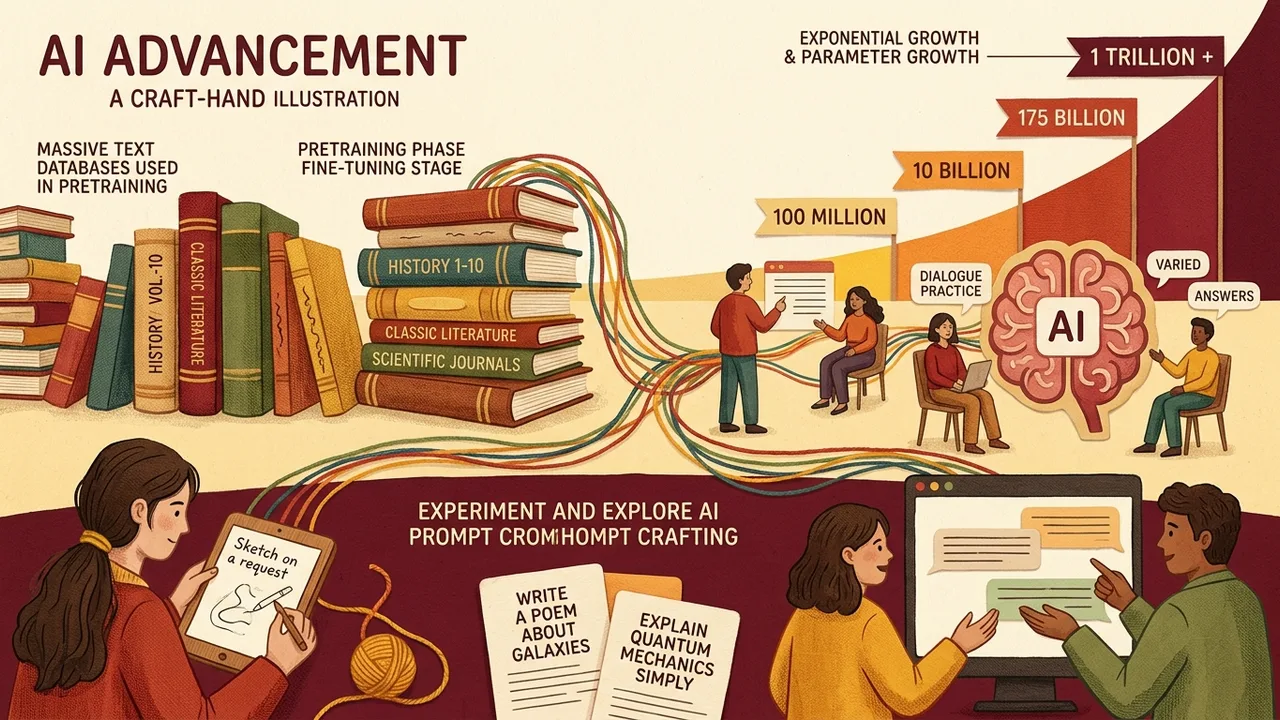
Combined with two key techniques—pretraining where models absorb knowledge from massive text databases, and fine-tuning where they practice specific tasks through dialogue—AI finally cracked the code of context. The results speak for themselves: GPT's parameters exploded from 100 million to over one trillion, and with each leap, these models became exponentially more capable and intelligent. Explore how transformer-based models work by trying ChatGPT or similar tools yourself. Experiment with different prompts and observe how the AI understands nuance and context. Share your findings with your team to understand the practical applications of this breakthrough technology in your industry.