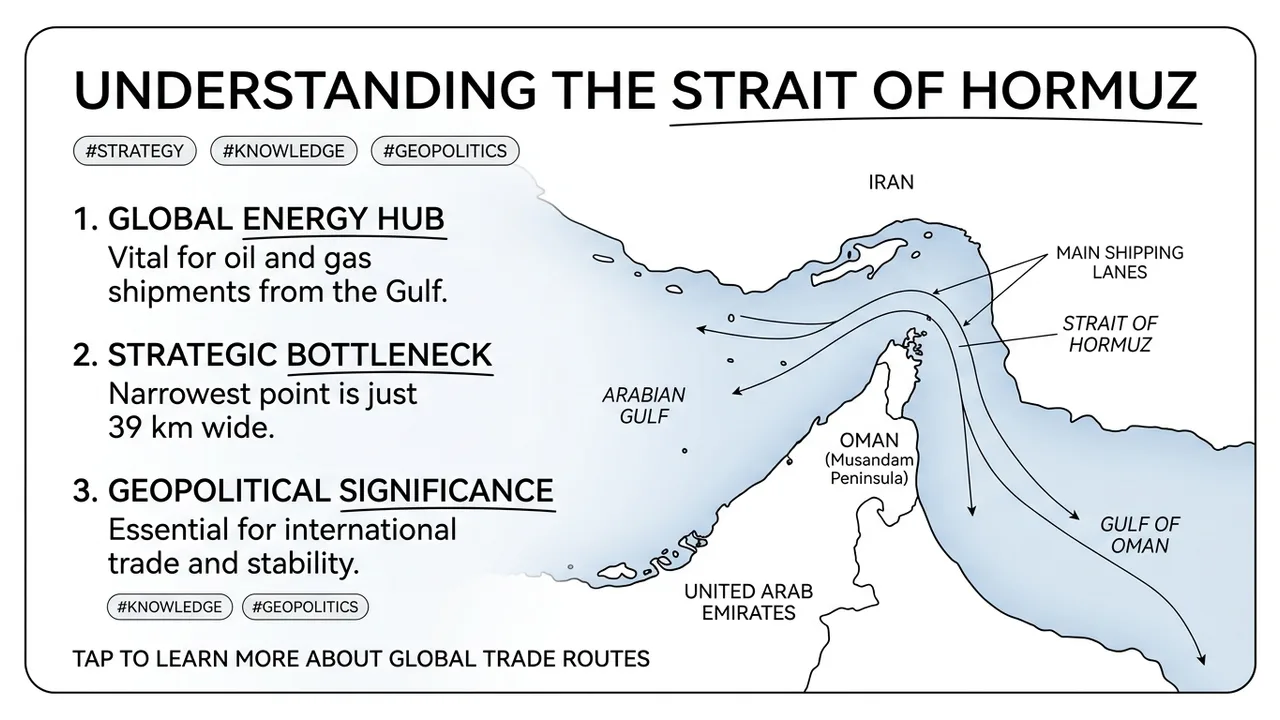
Imagine a waterway so strategically important that the stability of the global economy depends on it. The Strait of Hormuz, located between Iran and Oman, is one of the most critical chokepoints in international trade.
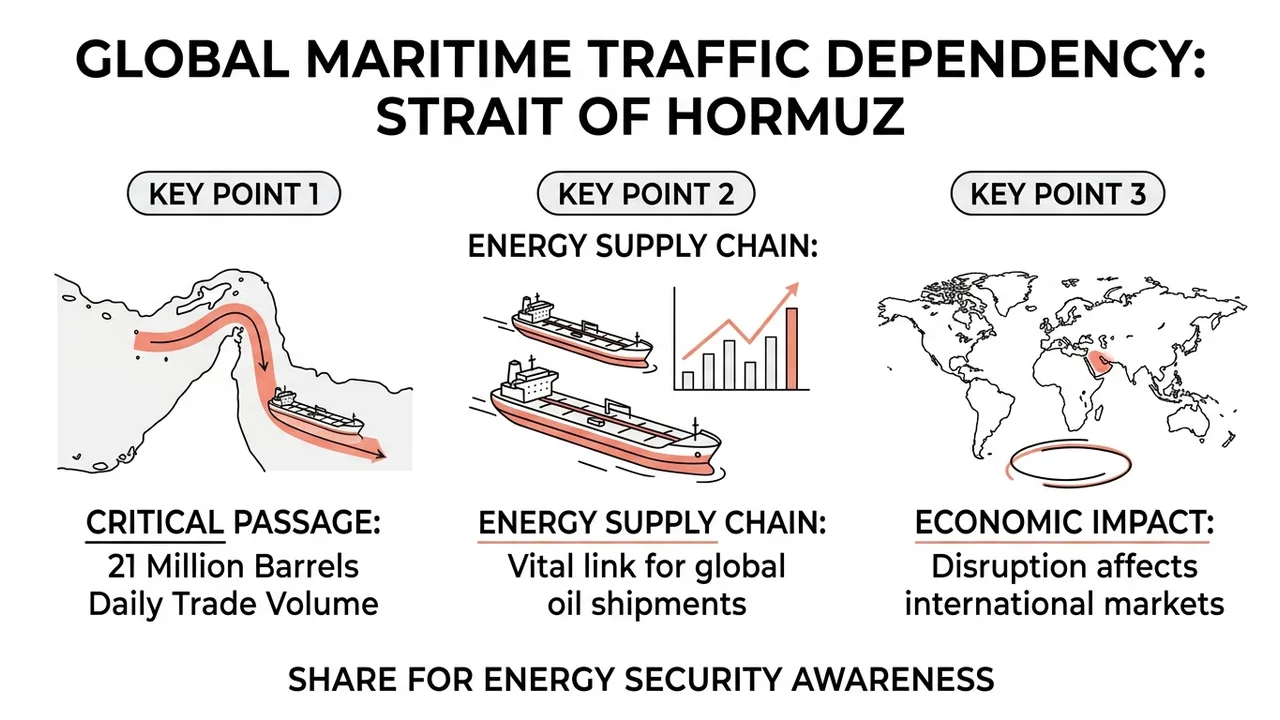
Every single day, approximately 21 million barrels of oil pass through this narrow passage—that's roughly one-third of all seaborne traded petroleum globally. For nations dependent on energy imports and industries powered by crude oil, understanding the significance of the Strait of Hormuz isn't just an academic exercise; it's essential to comprehending global geopolitics, energy security, and economic stability.
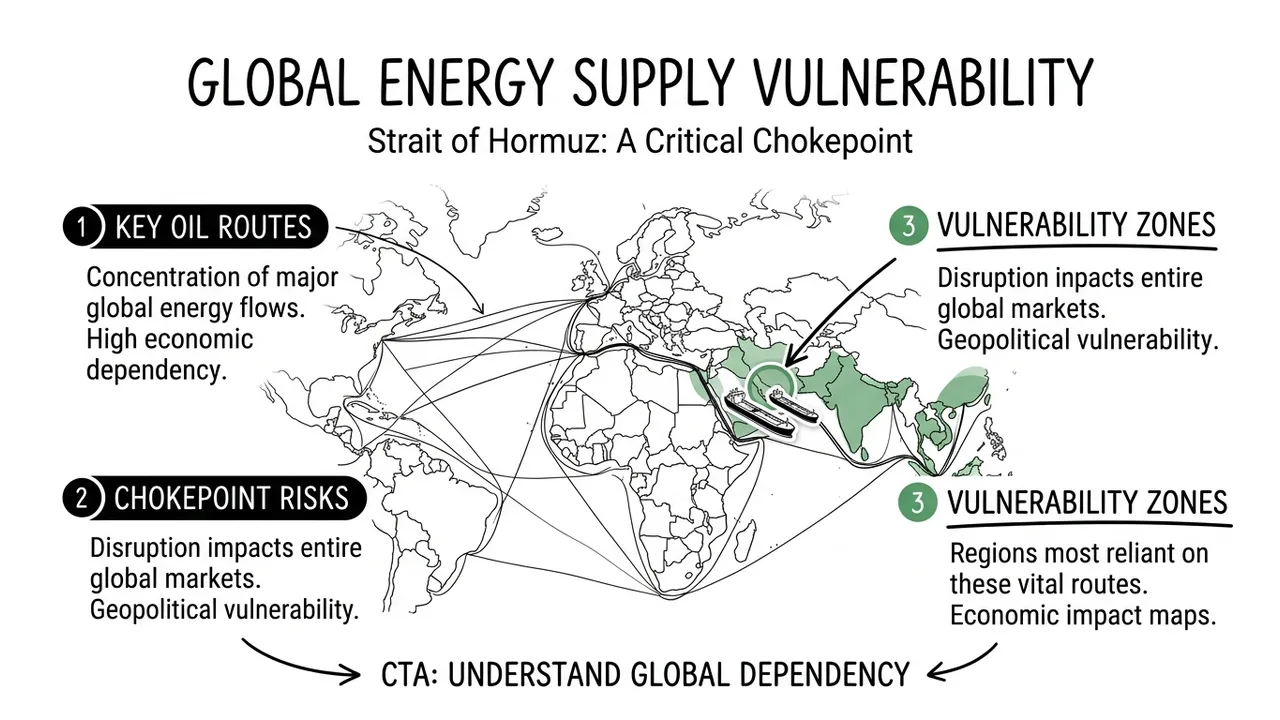
The vulnerability of global energy supplies represents one of the most pressing challenges facing modern economies. The concentration of oil shipments through the Strait of Hormuz creates an unprecedented dependency that leaves the world exposed to significant risks.
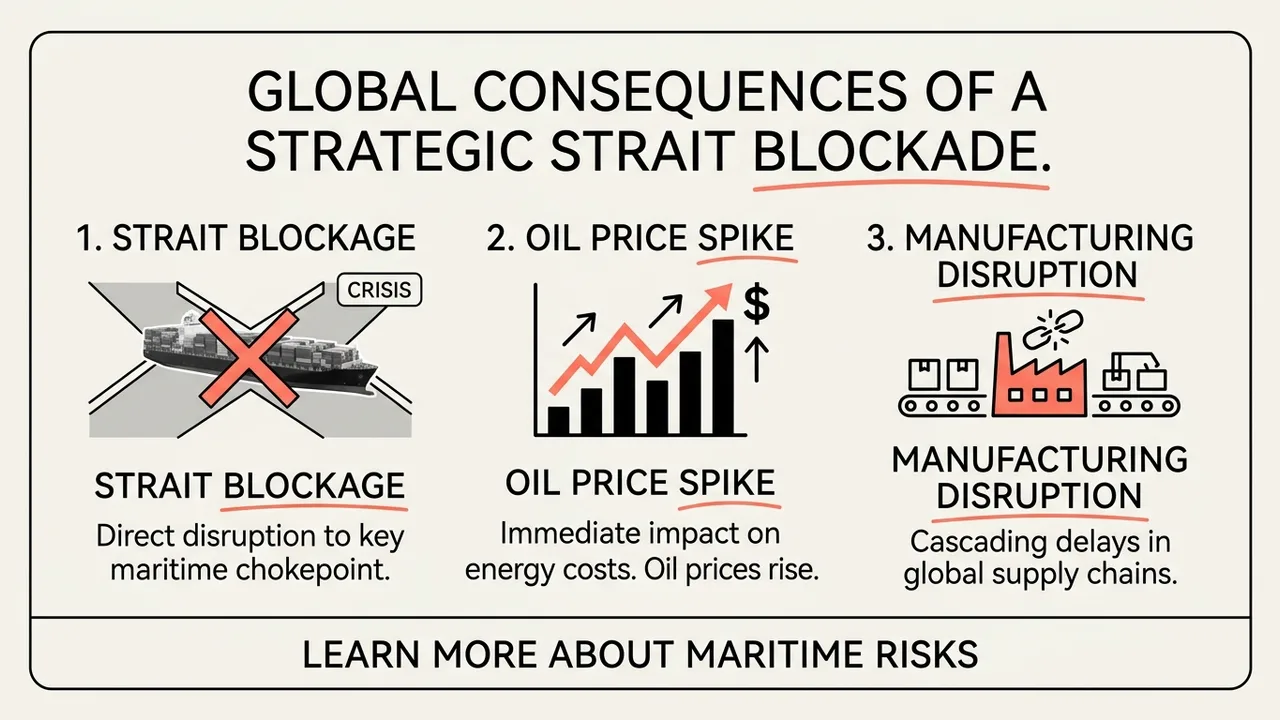
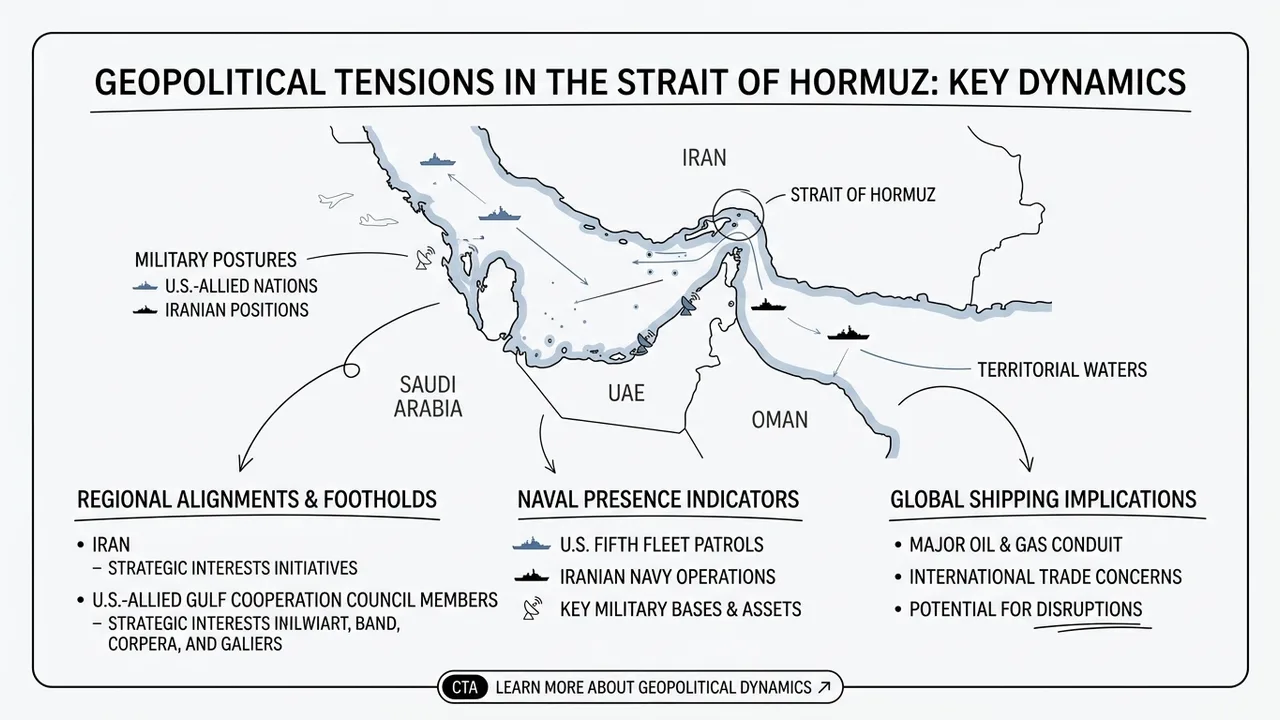
If this single passage were to be disrupted—whether through political conflict, military action, piracy, or natural disaster—the consequences would be catastrophic. A temporary blockade could send oil prices skyrocketing within hours, potentially triggering economic recessions across multiple continents. Major economies, particularly in Europe, Asia, and North America, would face immediate energy shortages, disrupting manufacturing, transportation, and heating systems. Furthermore, the geopolitical tensions surrounding the strait create constant uncertainty. With Iran on one side and U.S.-allied nations on the other, the region has become a flashpoint for international tensions. Threats of sanctions, military posturing, and regional conflicts perpetually hang over this vital waterway. Additionally, the infrastructure supporting maritime traffic through the strait faces aging equipment, limited capacity expansion options, and increasing concerns about environmental protection and maritime security. Ships navigating these waters must contend with narrow passages, variable sea conditions, and the ever-present threat of piracy and hostile naval activity.
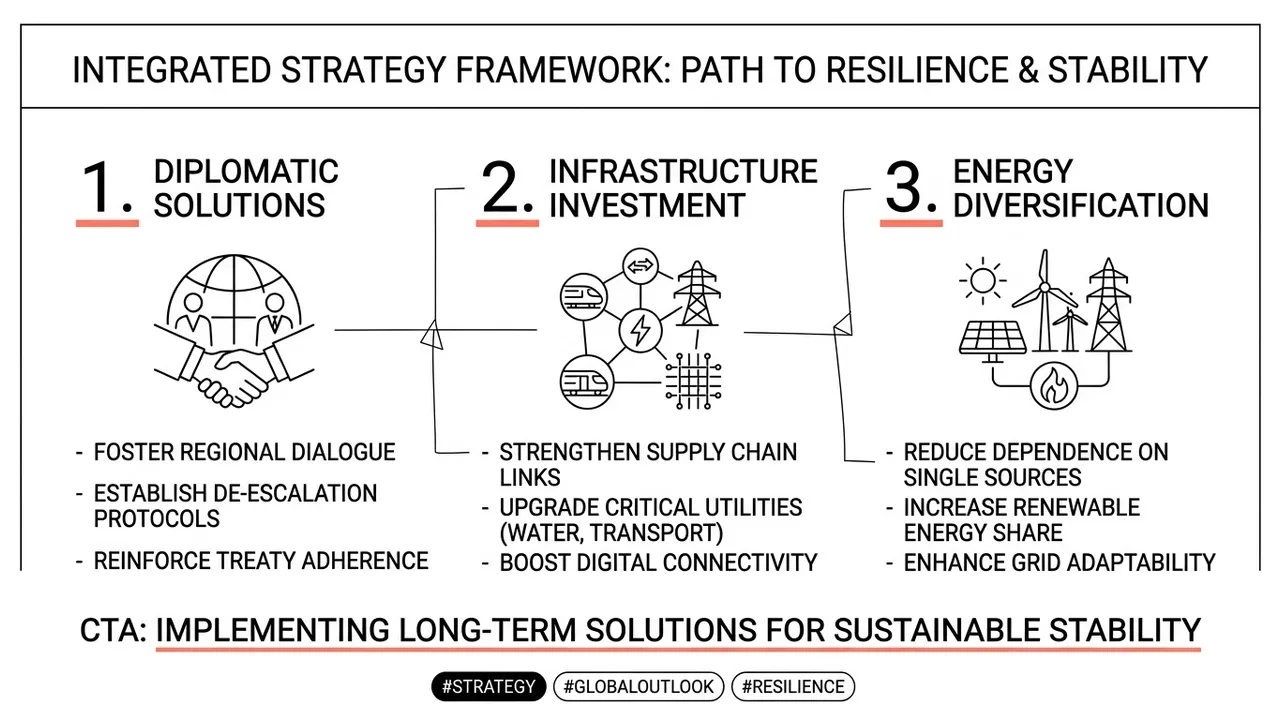
Understanding and strategically addressing the challenges of the Strait of Hormuz requires a multifaceted approach combining diplomatic solutions, infrastructure investment, and energy diversification. First, international cooperation and dialogue remain fundamental to maintaining stable transit through the strait.
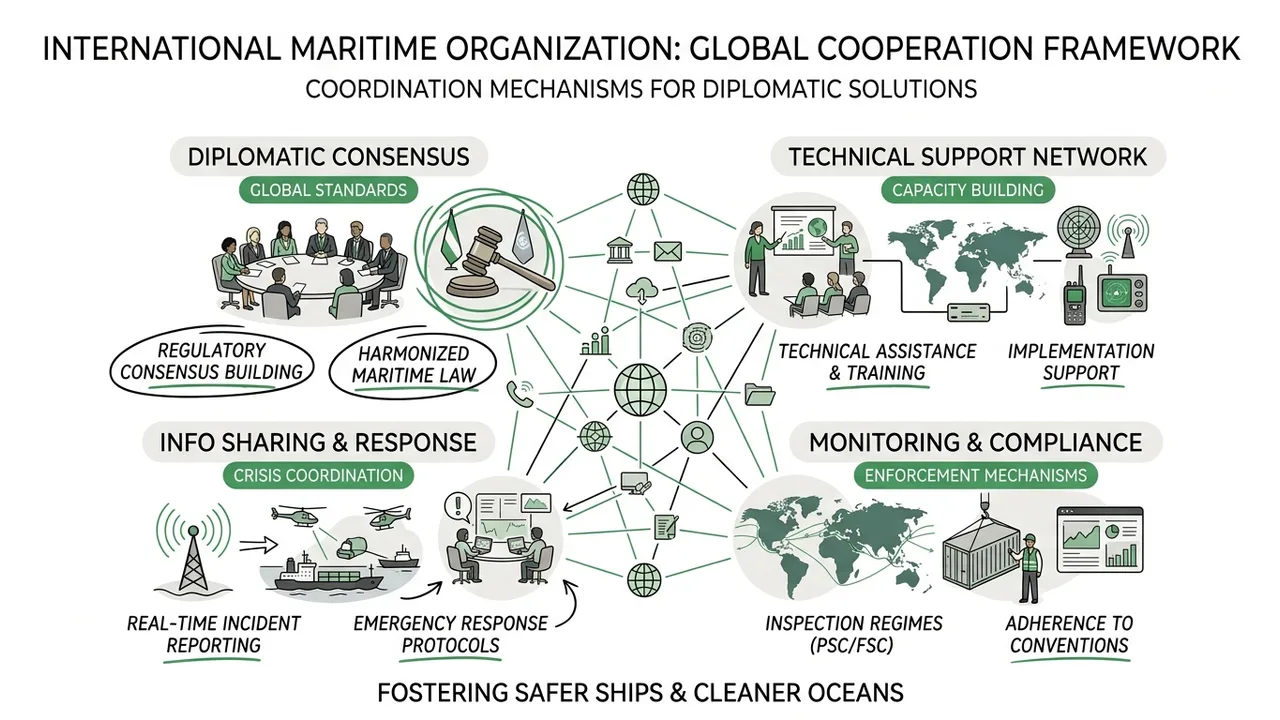
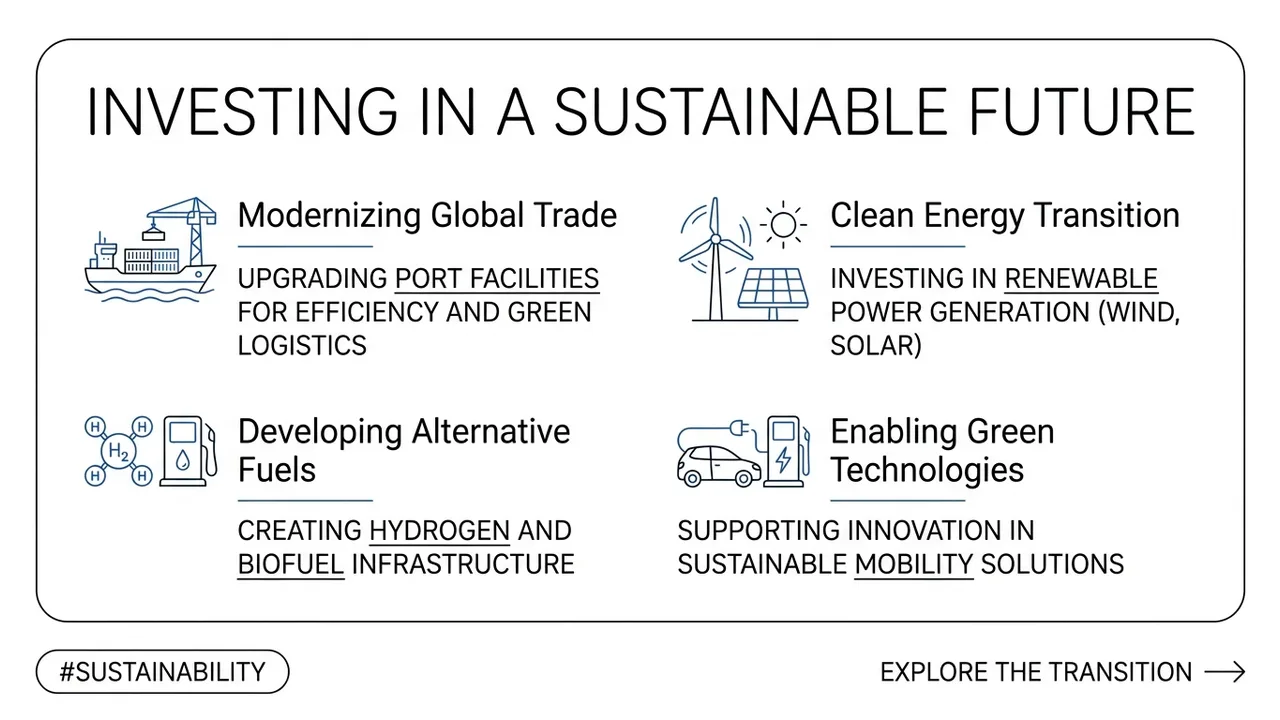
Organizations like the International Maritime Organization work to establish protocols, safety standards, and dispute resolution mechanisms that reduce tensions and provide predictable shipping corridors. Enhanced naval presence and coordination among international powers, though sometimes controversial, creates a stabilizing effect that reassures shipping companies and energy traders. Second, investing in infrastructure improvements directly addresses capacity and safety concerns. Modern port facilities, advanced navigation systems, and improved communication networks reduce accidents and increase efficiency. Countries and international bodies are working to upgrade facilities and implement emerging technologies like autonomous vessel monitoring and real-time risk assessment systems. Third, and perhaps most importantly, energy diversification strategies reduce the world's dangerous dependency on the Strait of Hormuz. This includes developing alternative energy sources such as renewable energy, natural gas, and nuclear power. Additionally, expanding alternative shipping routes, such as pipelines through Central Asia or maritime routes around Africa, provides backup options that reduce vulnerability. Strategic oil reserves maintained by major consuming nations also provide crucial buffers against temporary disruptions. Furthermore, technological innovation in energy efficiency reduces overall demand for imported oil, while advances in liquefied natural gas infrastructure create alternative pathways for energy distribution. Finally, diplomatic initiatives aimed at reducing regional tensions, supporting conflict resolution, and establishing international agreements about freedom of navigation help create a more stable geopolitical environment surrounding the strait.
To prepare for an energy-secure future, stakeholders must take immediate action across multiple fronts. If you work in energy policy or business planning, begin analyzing your organization's dependency on Hormuz-routed oil and develop diversification strategies.
Evaluate investments in renewable energy infrastructure, explore alternative supply chains, and consider partnerships with companies developing energy-independent solutions. For policymakers and government officials, prioritize diplomatic engagement and support international cooperation mechanisms that stabilize the region. Advocate for investment in strategic petroleum reserves and infrastructure development for alternative energy routes. For investors and business leaders, assess how geopolitical risks around the Strait of Hormuz impact your portfolio and operations. Identify opportunities in renewable energy, liquefied natural gas infrastructure, and energy efficiency technologies that reduce dependency on this critical chokepoint. For educators and researchers, deepen your analysis of the strait's strategic importance and explore innovative solutions to global energy security challenges. Share your findings with policymakers and industry leaders to drive informed decision-making. The time to act is now—by understanding the critical importance of the Strait of Hormuz and implementing comprehensive strategies to reduce our dependency on this single passage, we can build a more resilient and secure global energy system for future generations.